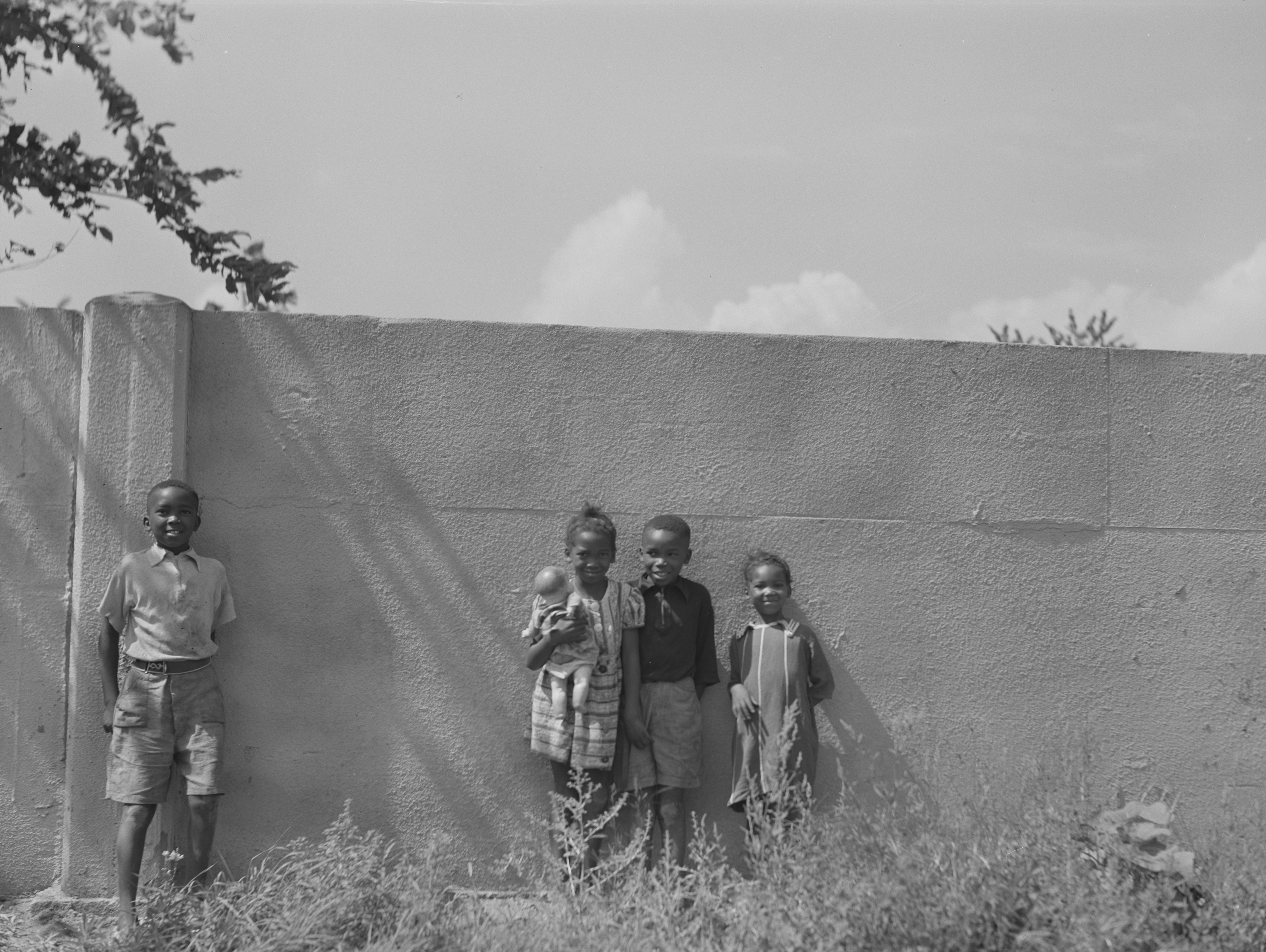
A representative of the owner said the wall was going up "simply to improve the subdivision by giving it a fixed border and trim." The wall is six feet high and a foot thick, and it stretches about half a mile. A developer built it in 1941 on Detroit's west side to keep Black Detroiters out of a new white-only subdivision, which made it easier to get federal loans. It is still there.
The developer was James T. McMillan, and the subdivision was Blackstone Park. The wall runs parallel to Birwood Avenue for three city blocks, starting at an alley south of Eight Mile Road. The Michigan Chronicle ran an article criticizing the owner for trying to establish a "Negro ghetto."
The problem sat next door. Black residents had settled Eight Mile-Wyoming in the early 20th century, outside the city limits, and pooled their money to build their own houses. Detroit annexed the neighborhood in 1926. A 1938 survey by the Detroit Housing Commission found residents among the poorest in the city, yet over 90 percent lived in single family homes they had built.
Appraisers for the Home Owners' Loan Corporation saw the new subdivision's closeness to a Black neighborhood as high risk, and the FHA was unable and unwilling to lend. At the time the agency wouldn't subsidize developments close to Black neighborhoods, and its underwriting manuals showed a preference for physical barriers to stop integration. Between 1930 and 1950, less than two percent of FHA loans went to non-white buyers.
So the developer built one. The compromise gave him loans and mortgage guarantees in exchange for the wall. Contractors and realtors could tell white buyers it would protect them. Children on the west side went to MacDowell Elementary, which was majority white, and children on the east side went to Higginbotham School, which was mostly Black.
The law changed before the wall did. The Supreme Court decided Shelley v. Kraemer in 1948 and outlawed enforcement of racial deed restrictions. By the following year, houses on the west side of the wall were on the market for Black buyers, and Black families were moving beyond it in the 1950s. By the 1960s both sides were majority Black.
The concrete stayed put.
The artist Chazz Miller and neighborhood residents painted a mural across a stretch of the wall in 2006, with scenes from Black history and life in Eight Mile-Wyoming. It shows Sojourner Truth leading children through the Underground Railroad, Rosa Parks getting on the bus, Harriet Tubman, children blowing bubbles, the Detroit Tigers, and Alfonso Wells, the activist the park is named for.
Teresa Moon moved into the neighborhood with her family in 1959 and grew up seeing the wall every day. She didn't learn the truth about it until much later in life. Now she teaches young people who hang out in the park about it.
The wall and four other Detroit sites tied to civil rights and Black history were added to the National Register of Historic Places in 2021. Mayor Mike Duggan called the recognition "overdue." Jamon Jordan, the city's first official historian, said, "There will be people who will not believe you if you told them there was a segregation wall built in the United States, in the north, in the City of Detroit in 1941." A state historical marker was unveiled there on Monday, October 10, 2022.