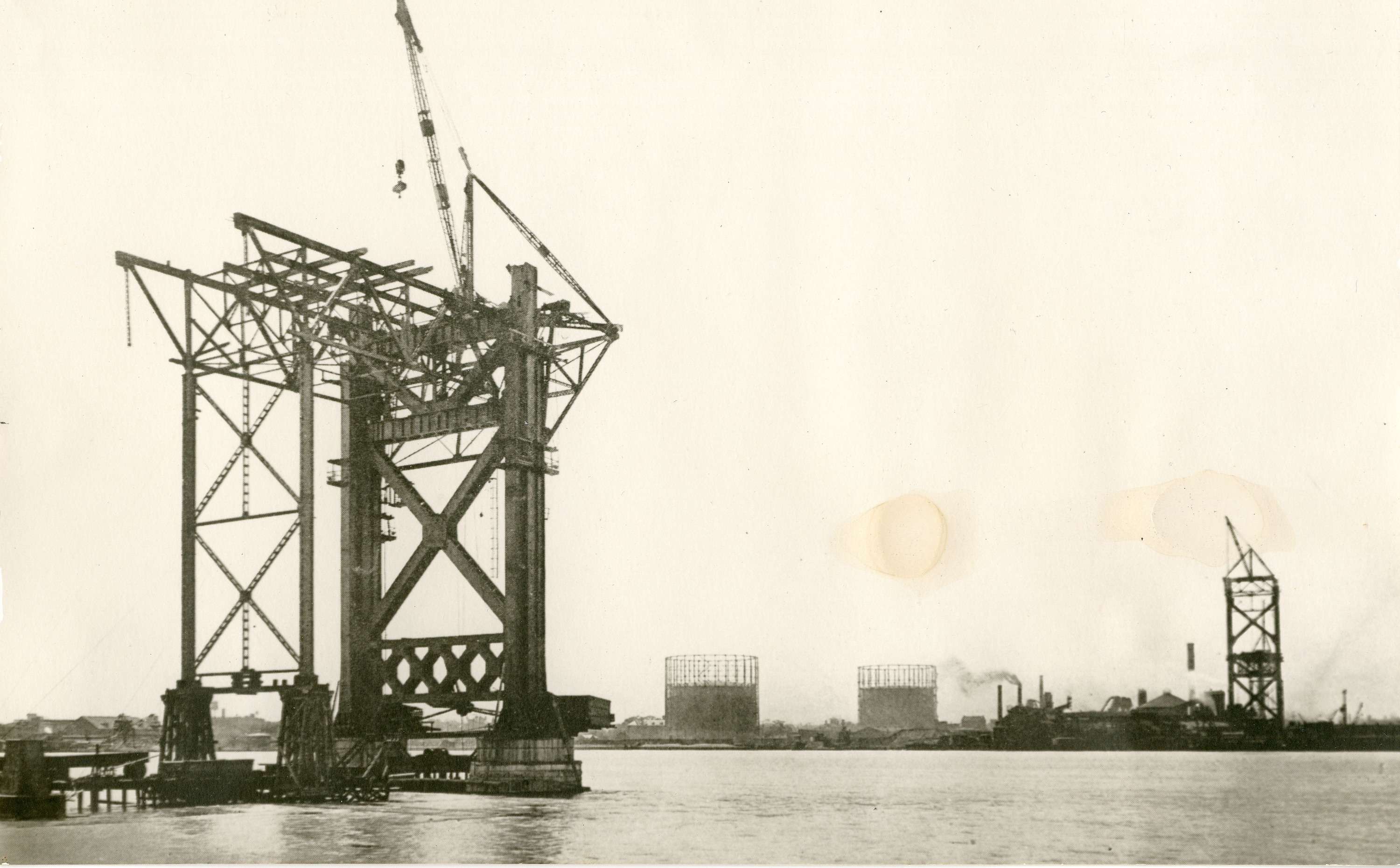
The Ambassador Bridge began as something to paint. John W. Austin of the Detroit Graphite Company wanted a bridge to paint, and in 1924 he took the idea to Joseph Bower, a Detroit-raised banker, at his bank in Manhattan. Bower put together $23.5 million and hired McClintic-Marshall of Pittsburgh, the firm that later built the Golden Gate.
Mayor John W. Smith fought it. He vetoed the bridge, lost the override, then went to court to force a citywide vote. The night before the election, H. H. Esselstyn, Detroit's Commissioner of Street Railways, showed up at a radio station to speak for the bridge. Smith fired him on the spot. Esselstyn went on the air anyway. "I want all Detroiters to know that because I have made this short speech, I have been discharged as commissioner of street railways," he said.
On June 28, 1927, 74,558 Detroiters voted on whether a private company could throw a bridge across the river to Windsor. The bridge won 8 to 1. The special election drew a big turnout, and Bower paid its $50,000 cost himself. Smith lost his own primary that October.
Crews had been boring for bedrock since May 1927, and by early 1929 the steel was a full year ahead of schedule. Then inspectors found broken wires in the new cables. McClintic-Marshall had specified a new heat-treated wire. Word reached Detroit on February 22 that broken wires had turned up in the cables of the Mount Hope Bridge in Rhode Island, which shared the new wire. A later inspection found a few broken wires in Detroit too. Work stopped March 1. Every strand came down, and the builder ate about $500,000 to restring both cables with cold-drawn steel.
The bridge was ready for operation on November 11, 1929, nine months ahead of schedule, and the Ambassador Bridge opened to traffic on November 15, weeks after the stock market crashed. Its 1,850-foot main span made it the longest suspension bridge in the world, a title it held until the George Washington Bridge opened in 1931. Almost 200,000 vehicles crossed before the year was out. For decades it carried about a quarter of all trade between the United States and Canada, and more than 10,000 commercial vehicles crossed on a typical weekday.
It stayed private.
The Bower family sold on July 31, 1979, to Central Cartage, the trucking company of Detroit native Manuel Moroun. Matty Moroun fought a second, public bridge for years and died in 2020. His son Matthew owns the bridge now. It takes in about $300 million a year in tolls, and a car pays $10 to cross.
On July 27, 2026, the public Gordie Howe International Bridge opened downriver. A Canadian Crown corporation owns it, and Canada paid for construction. Its 2,799-foot main span is the longest cable-stayed span in North America, and a car crosses for $5.75. Ambassador traffic fell about 30 percent in the first month.