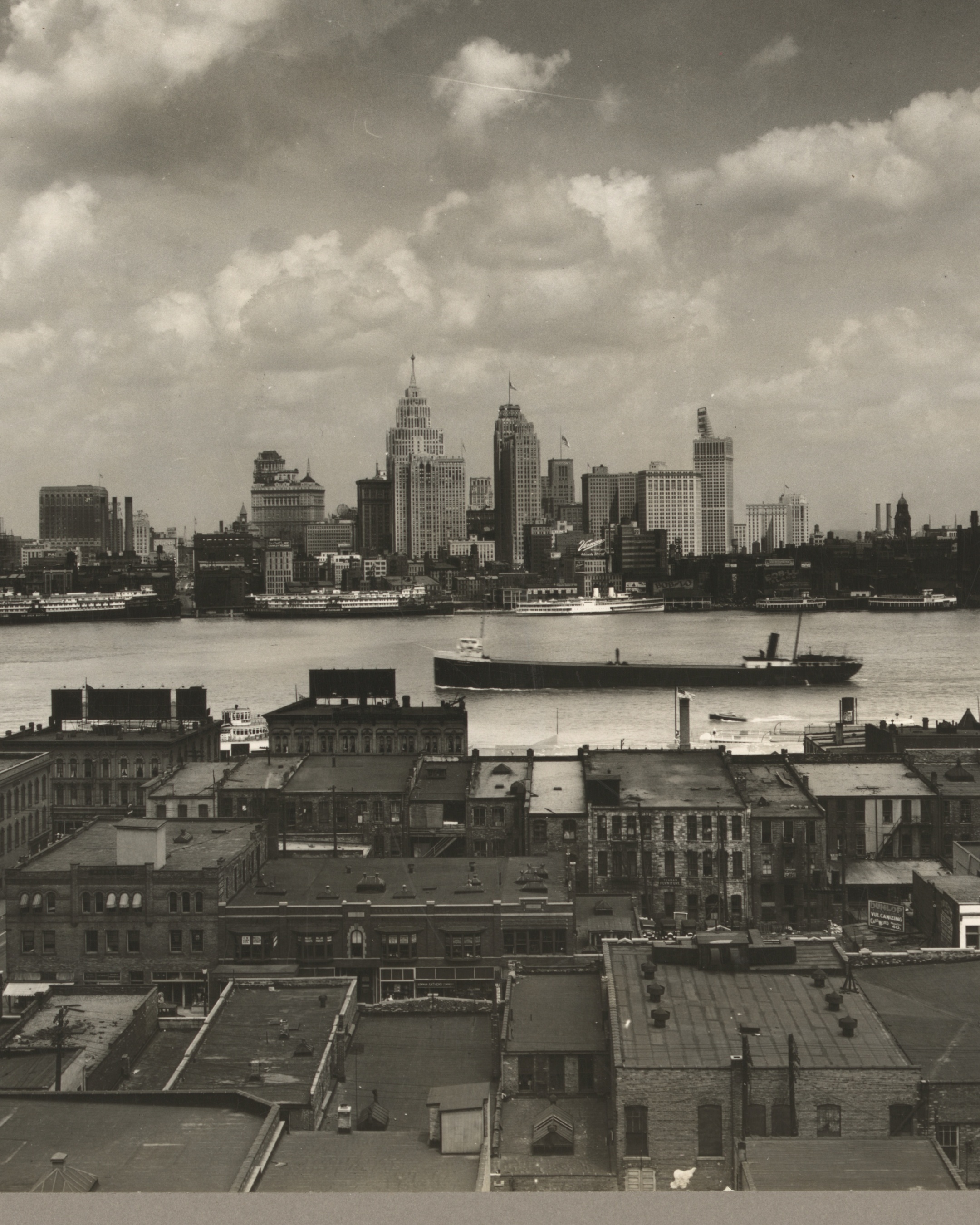
A boxcar of liquor came off at a Windsor dock, and a bribed customs officer stamped an export permit for Cuba or Venezuela. The paperwork was the easy part. The boat then ran the load to Detroit. The Detroit River is under half a mile wide at its narrowest, and for thirteen years it was the main liquor route into the United States.
The Walter P. Reuther Library at Wayne State puts 75 percent of all the liquor smuggled into the country during Prohibition through the Windsor-Detroit Funnel, the thirty-five mile stretch of water between Lake Erie and the St. Clair River. The river's islands made crossings hard to spot, and there was no bridge until the Ambassador opened in November 1929.
America went dry in January 1920, and Michigan had already gone dry ahead of the rest of the country. Ontario left one door open. The Ontario Temperance Act, in force from 1916 to 1927, banned selling liquor inside the province and left distilling it and shipping it out legal.
The driver made about $200 for a day's work. A captain earned around $400 a month, against $35 for farming or fishing. When the river froze, they drove across the ice. Runners favored lighter cars with smaller engines, which they called whiskey sixes, and sleds went over by hand.
On the Detroit side, the Detroit News counted 16,000 to 25,000 speakeasies in the Detroit area in 1928. By 1929 rum-running was Detroit's second-largest industry, after autos. The Reuther Library puts the take at $215 million a year. Others say more. WDIV's 2018 history, drawing on Philip P. Mason's Rum-Running and the Roaring Twenties, put it above $300 million, more than $4 billion in 2018 dollars.
The money bought customs officers and cops. A State Police raid on the Deutsches Haus found 800 people inside, among them a congressman, a sheriff and Mayor John Smith. Gangs began capitalizing on the smuggling trade in 1923, the Purple Gang most notoriously. It would rob anyone with booze in the vehicle and steal the load. The residents and officials of Hamtramck and Ecorse openly ignored the law, and the Collingwood Manor Massacre in 1931 shocked the city.
Michigan went dry first and voted for repeal first. It was the first state to ratify the 21st Amendment, and repeal took effect on December 5, 1933.