Along the southwestern edge of Detroit, where the river bends and the steel frame of the Gordie Howe International Bridge rises across the water, sits a fishing spot most Detroiters have never heard of.
Delray Park is a boat launch and shoreline on the Detroit River, on the far southwest side of the city. Anglers who find it pull walleye, white bass, and perch from a bank wide enough to cast from. The hard-surface ramp handles medium-sized boats. The site has run for years as a low-key public access point, listed alongside the river's other launches but kept up at a minimal level, and longtime fishermen say it has more to offer than its worn condition suggests.
That future is now a live question. The Michigan Department of Natural Resources and DTE Energy, which holds the land at the site of the utility's former Delray power plant, have been discussing what becomes of the park, according to reporting by The Detroit News. The outlet reported that DTE built the park and stepped back from significant upkeep in recent years, and that the talks could open the door to new investment in the launch and shoreline. Gilbert Singleton, who runs Walleye Gil's Guide Service, told The Detroit News the fishing there is prime and the shoreline access is strong. Neither agency has announced an outcome or a timeline.
There is a public mechanism that ties a utility like DTE to Michigan's fisheries, and it is a matter of record. After fish losses at the Ludington Pumped Storage Plant, which DTE co-owns with Consumers Energy, a decade of legal action by the state, federal agencies, conservation groups, and Native American tribes produced a 1996 settlement that created the Great Lakes Fishery Trust. The trust's stated mission is to provide funding to enhance, protect, and rehabilitate Great Lakes fishery resources, work that has included public fishing access and habitat projects. When federal regulators granted Ludington a new 50-year operating license in 2019, the settlement was renewed for another half-century. The arrangement is the long-running framework through which Ludington's operators help offset their impact on the region's fish, and it is the backdrop against which any Delray Park talks unfold.
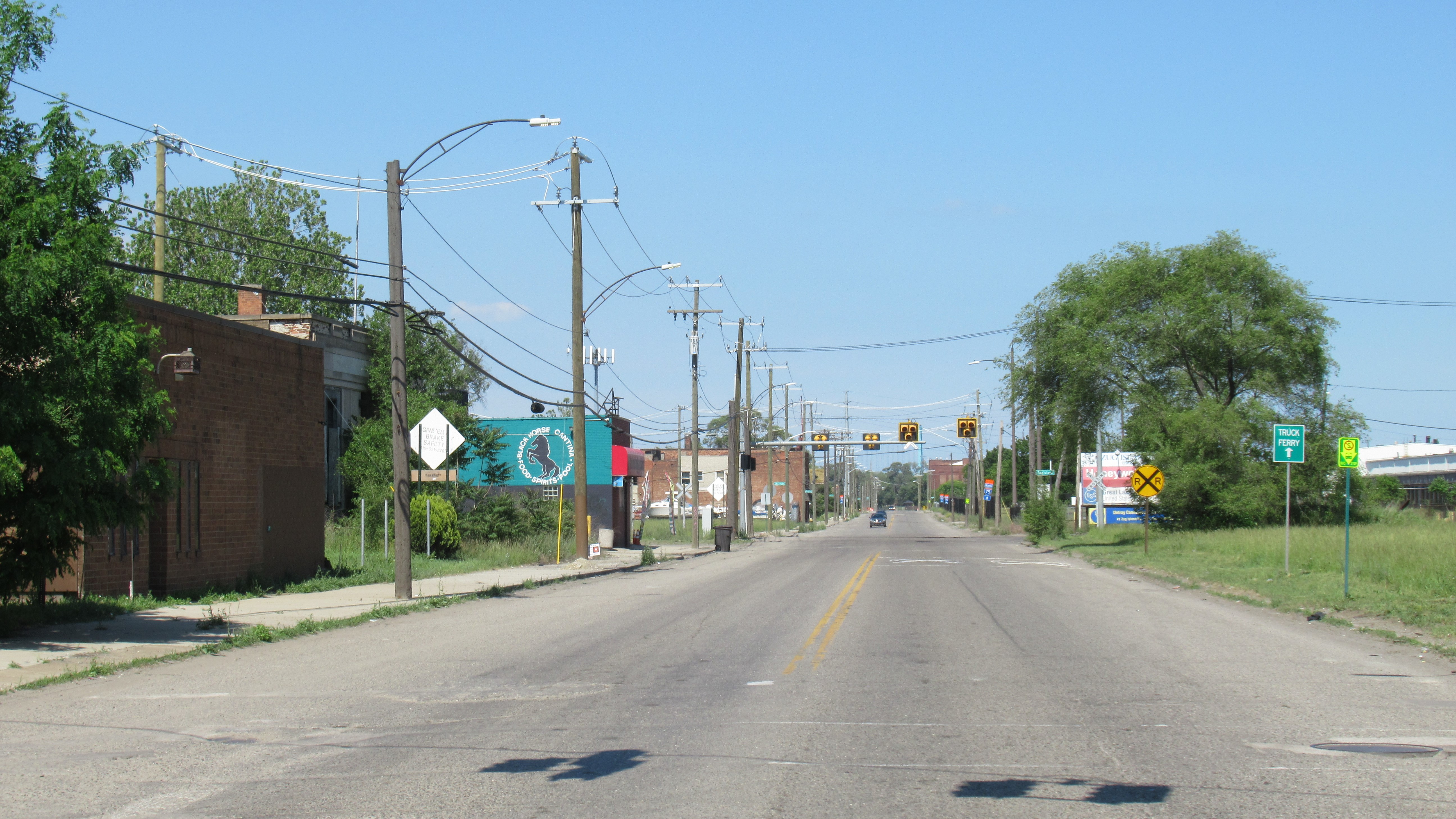
Delray's story is inseparable from its geography. The neighborhood sits in the far southwest corner of Detroit, pressed between the river and the rail yards that fed the heavy industry that defined it for most of the 20th century. It was platted as Belgrade in 1836 and renamed Del Rey in 1851 at the suggestion of resident Augustus D. Burdeno, a Mexican-American War veteran who had passed through a village called Molino del Rey during his service in Mexico. Heavy industry arrived in the 1890s, the area incorporated as a village in 1897, and its roughly seven square miles were annexed into Detroit in 1906.
Immigrants from Eastern Europe filled the neighborhood, drawn by manufacturing jobs. The Hungarian community became a defining presence, and by 1930 Delray held roughly 24,000 residents, among the densest in the city at the time. Pollution worsened, industry expanded, and the population fell sharply after World War II, leaving Delray one of the least-populated neighborhoods in Detroit today. The Gordie Howe International Bridge construction nearby has reshaped the area's geography again and cleared households from the immediate neighborhood.
What remains along the waterfront is a fishing spot with real reach. A public park with river access and a working boat launch, if developed, would be one of the few assets in that part of southwest Detroit built around community use rather than industrial function. What the conversation between the DNR and DTE produces, and when, has not been announced. But it is the first formal opening in years for deciding what Delray's riverfront becomes next.