Hart Plaza sits on 14 acres of the Detroit River between Jefferson Avenue and the water. The Japanese American sculptor Isamu Noguchi shaped its layout, working with the Detroit firm Smith, Hinchman and Grylls. The plaza opened in 1975 as the Civic Center Plaza, was named in 1976 for U.S. Senator Philip Hart, and reached completion at the end of the decade. Two Noguchi works anchor it: the Horace E. Dodge and Son Memorial Fountain at the center and the 120-foot stainless-steel Pylon near the entrance, both built in 1981.
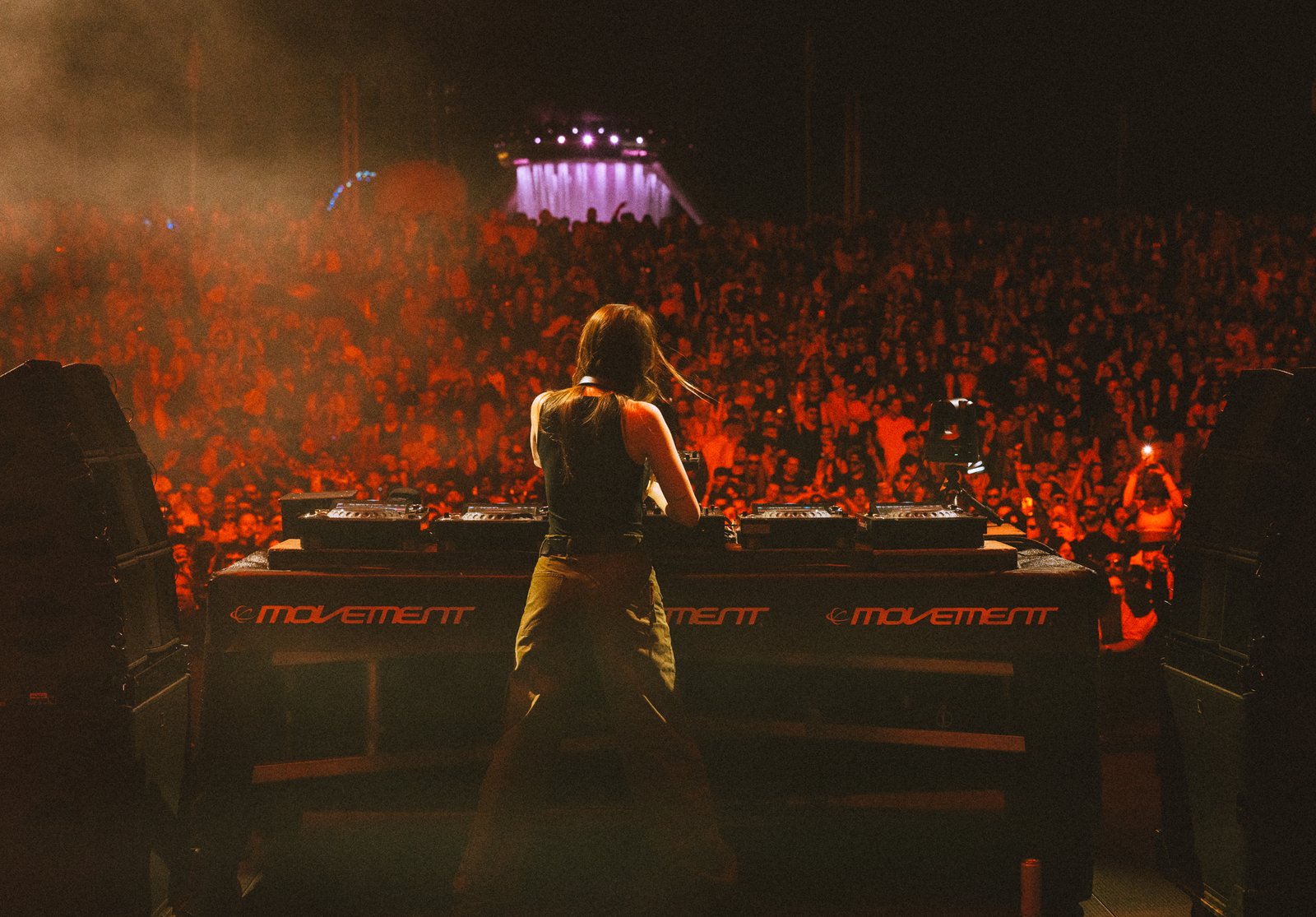
The plaza was made for crowds. Tiered concrete amphitheaters step down toward the river, and the space has held roughly 40,000 people, per the Detroit Historical Society. Over the years it has hosted the African World Festival, Concert of Colors, a Cinco de Mayo gathering, the city's New Year celebration, and the Detroit Electronic Music Festival, now Movement.
Movement is the rare paid event on a plaza built mostly for free ones. Most of the others have run here for decades. The African World Festival spent years at Hart Plaza before moving on and later returning. Concert of Colors has used the plaza in various seasons since the early 1990s. The Cinco de Mayo celebration centered on West Vernor in southwest Detroit has kept a Hart Plaza presence in many years.
Movement takes more of the plaza than any of them. The 2026 edition runs Saturday through Monday over Memorial Day weekend, May 23 to 25, produced by the Detroit promoter Paxahau, per the festival's site. Its stages spread across the upper plaza and down into the lower amphitheaters: the Movement Stage on the open riverfront where most festivals put their main stage, plus the Waterfront, Pyramid, Stargate, Detroit, and Underground stages. The Underground is the only fully covered space, set into the concrete amphitheater built beneath the central platform.
The design is what lets a multi-stage layout work without chaos. Crowds move between stages along the concrete steps and walkways instead of bottlenecking. Sight lines from the upper plaza reach the Pylon and the river. The bowl shape of the lower tiers helps contain sound even with several stages running at once.
The plaza has also been through recent repair work. A roughly $9 million round of city-led improvements, funded largely with federal pandemic relief money, covered accessibility upgrades, new stairs and surfacing, and a restoration of the Dodge Fountain that reopened in June 2024. The work was framed as repair rather than reinvention, and Noguchi's original concrete still drives how a festival fits the space. In 2024 the plaza was added to the National Register of Historic Places, per the Detroit News.
The plaza opened in the mid-1970s. The first electronic music festival arrived in 2000. More than two decades separated Noguchi's riverfront from that first weekend of techno, and the festival has been returning to the same concrete ever since.
Hart Plaza, 1 Hart Plaza, Detroit.