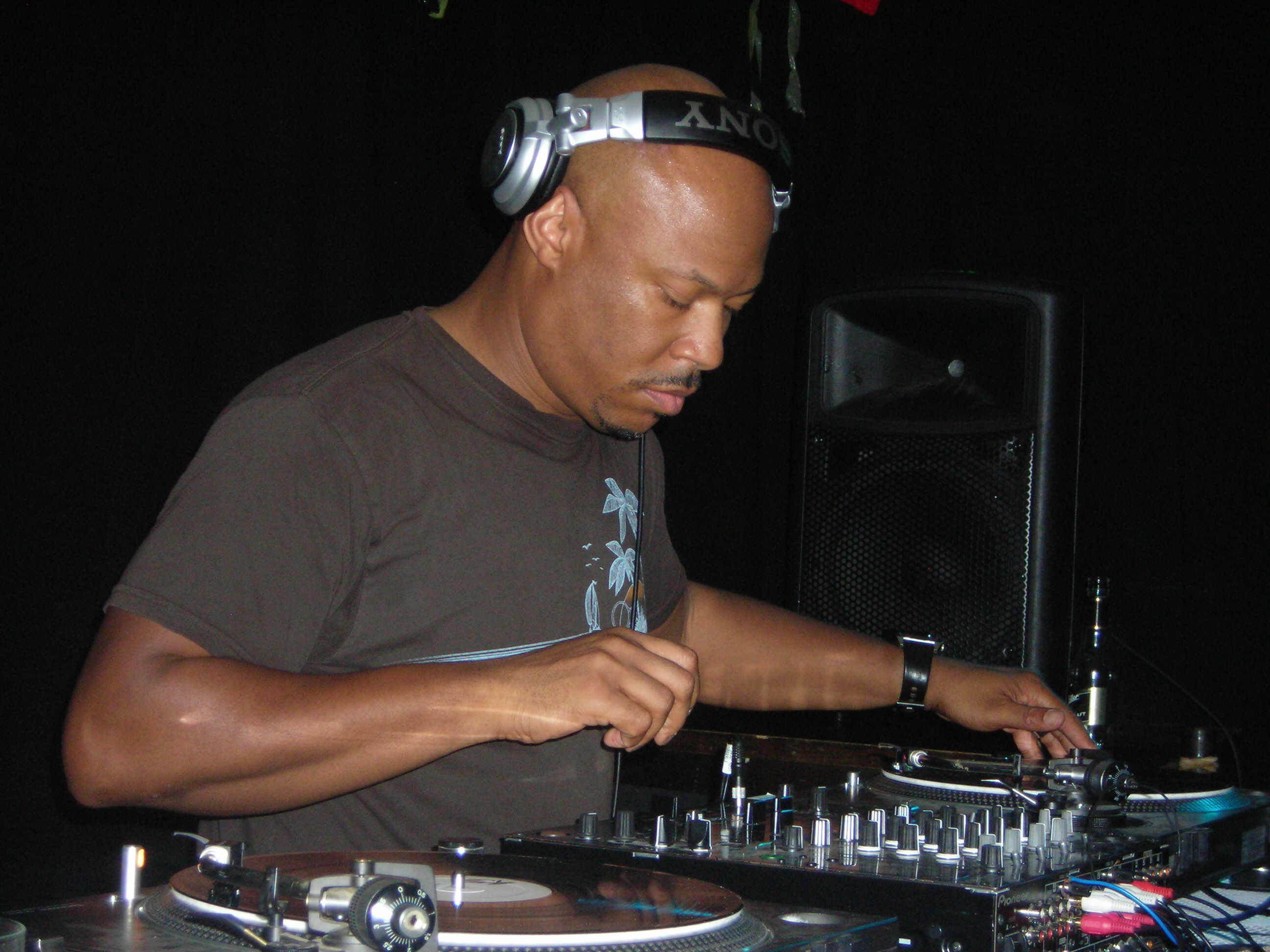
Robert Hood was born in Detroit in 1965 and came up as a founding member of Underground Resistance, the techno collective started by Jeff Mills and Mike Banks. Hood took the title Minister of Information inside the group, which built its identity around militant politics, anonymity, and a refusal to chase the mainstream.
In 1994 Hood started his own label, M-Plant, in Detroit. Its first major statement was "Minimal Nation," a record that stripped techno down to its barest moving parts and kept a loose, dirty funk inside the repetition. The label's own description calls it the birth of minimal techno, and the genre tag traces back to the album's name. The same year, Hood released "Internal Empire" through Tresor in Berlin, on November 28, 1994 per the label's catalog. Both records are quiet, precise, and built on subtraction, pushing the form down to its outline.
Before M-Plant, Hood had already left Detroit alongside Mills in 1992 to record under aliases including H&M and to work on the X-series for Tresor, the X-101, X-102, and X-103 releases that bridged Detroit and the early Berlin techno scene. His solo album "Paradygm Shift" arrived later, in 2017.
M-Plant has run on the same narrow template for three decades. The catalog stays small, the music comes out on vinyl, and the sleeves carry almost no copy. The black labels with plain white text are recognizable from across a record store, and the lack of marketing is itself part of the brand.
Floorplan is Hood's second long-running project. He launched it as a solo alias and later turned it into a duo with his daughter, Lyric Hood, who joined the act in 2016. Floorplan is the openly gospel and house side of his work, lighter in structure than the M-Plant catalog and rooted in his faith. The "Paradise" album came out in 2013 and "Victorious" in 2016. The two tour internationally as a father-and-daughter pairing, and they speak about the project as a family affair built on Lyric growing up around the music ("Lyric Hood told Billboard about learning the booth alongside her father").
Hood is an ordained minister, and he and his family relocated from Detroit to Alabama years ago, running church work in parallel with the touring schedule. That detail is unusual in techno, though the records suggest it has not changed the music in any structural way.
He keeps playing Detroit regardless of where he lives. Floorplan and Robert Hood sets have appeared at Movement, the festival run by Paxahau, and across the city's afterparty circuit, where local rooms book him when he is in town. The late-December holiday week is a regular slot for a Detroit Floorplan booking.
The minimal Detroit tradition runs straight through M-Plant, and Hood is the clearest line in it. Underground Resistance to M-Plant to Floorplan marks his own arc, and producers in Detroit and Berlin who came up through the 2000s and 2010s tend to point back to the Hood records as the load-bearing ones.