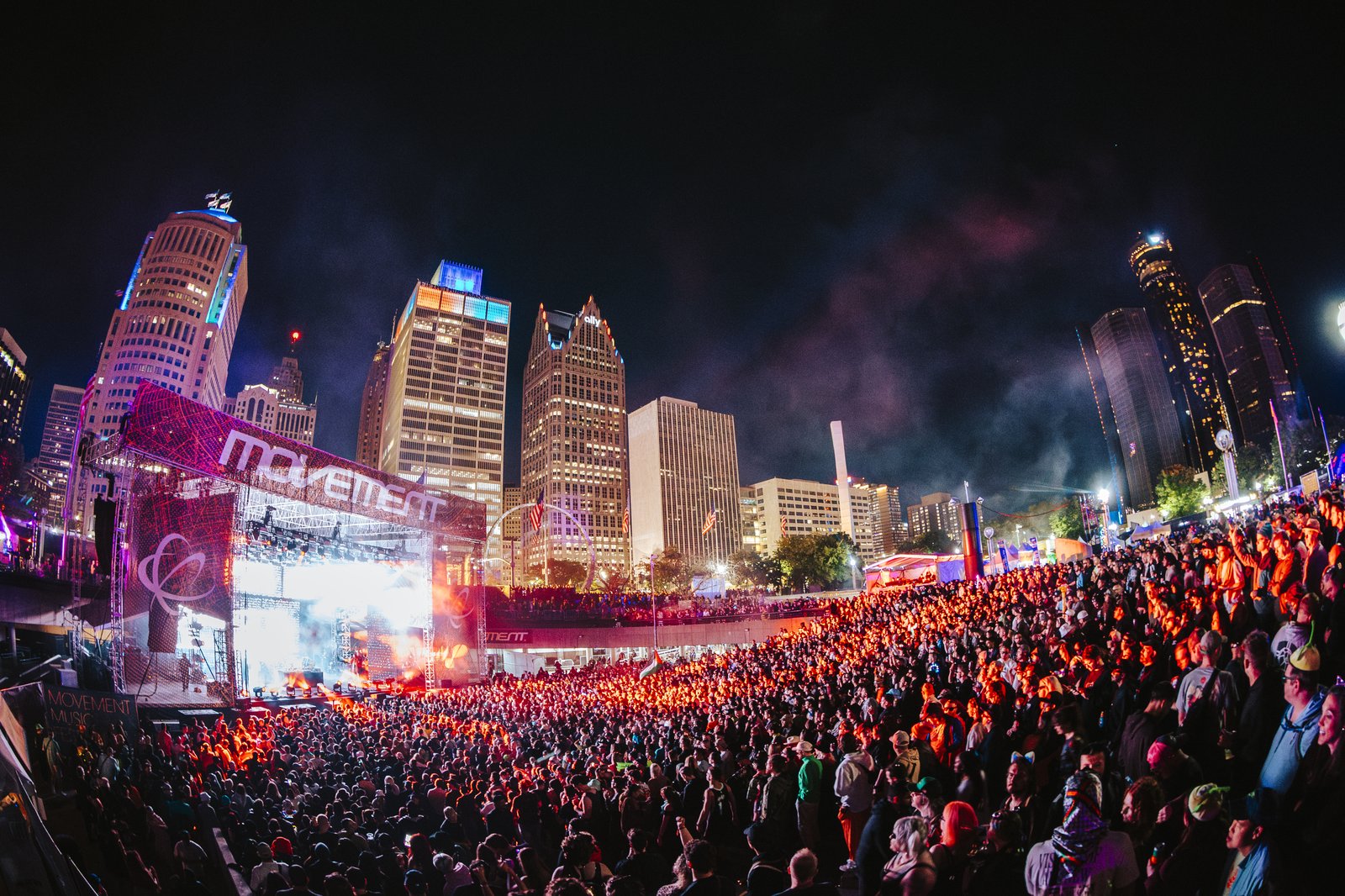
Detroit techno reached Europe before it had much of an audience at home. The record that opened the door was a 1988 UK compilation, "Techno! The New Dance Sound of Detroit," released on 10 Records, a Virgin imprint. It was put together by Detroit producer Derrick May and Neil Rushton, a British DJ and A&R scout who had tracked down the Detroit scene by calling a phone number printed on a Transmat label. The compilation title is widely credited with fixing the word "techno" to the sound coming out of the city. Two years later, Berlin took over as the genre's European base, and the Detroit-to-Berlin axis became the load-bearing line of the global scene.
Tresor opened on March 13, 1991, in the basement vault of the former Wertheim department store at Leipziger Strasse 126 in central Berlin, near Potsdamer Platz. That ground had sat on the former Berlin Wall strip; the Wall had come down only sixteen months earlier, in November 1989. The space was a literal safe, steel and concrete left over after the rest of the building was gone, and the room sounded like the metal box it was. Dimitri Hegemann, who had run the earlier UFO club and the Interfisch label, was the figure behind it.
What made Tresor matter was where Hegemann pointed it. The bookings and the early releases leaned hard on Detroit. The Tresor Records label launched the same year, and its first release, catalog number Tresor 1, was X-101, the Underground Resistance project involving Jeff Mills, Mike Banks and Robert Hood. The label's early roster reads like a Detroit directory with a Berlin address: Mills, Blake Baxter, Eddie Fowlkes, Juan Atkins, Robert Hood and Drexciya all turn up in the first years of the catalog.
The draw for the Detroit artists was infrastructure they did not have at home. Regular bookings. European touring routes. Vinyl distribution into Germany, France, the UK and Japan. For Underground Resistance in particular, a collective built on independence and a refusal to sign with US major labels, the Berlin connection was a way to reach a global audience without giving up the model.
The exchange ran both ways. Detroit artists went to Berlin and some stayed; Mills lived there for years. German producers absorbed the Detroit template and built on it. Hard Wax, the record shop Mark Ernestus opened in Kreuzberg in 1989, became the European clearinghouse for Detroit imports and a hub for the emerging Berlin sound. Out of that orbit came Basic Channel, the Ernestus and Moritz von Oswald project that formed in 1993 and ran the Detroit blueprint through dub.
The next generation of venues extended the line. Berghain opened in 2004 in a former power plant in Friedrichshain, with the upstairs room, Panorama Bar, opening that October and the main hall in December. Its booking policy followed the path Tresor had laid: Detroit artists are regulars, from Mills and Hood to Theo Parrish, Moodymann, Carl Craig and a younger cohort that grew up inside the lineage. A Berghain residency is about as close as the genre gets to a permanent home, and much of the rotation is Detroit-rooted.
The arrangement is simple to describe. Detroit made the music. Berlin built much of the machinery to distribute it and play it week after week. More than thirty years on, both halves still hold. A Detroit DJ who lands in Berlin will play Tresor or Berghain inside a year. A Berlin DJ visiting Detroit will turn up at Marble Bar, Spot Lite or one of the other rooms in the city. The flight has gone both ways since 1991.