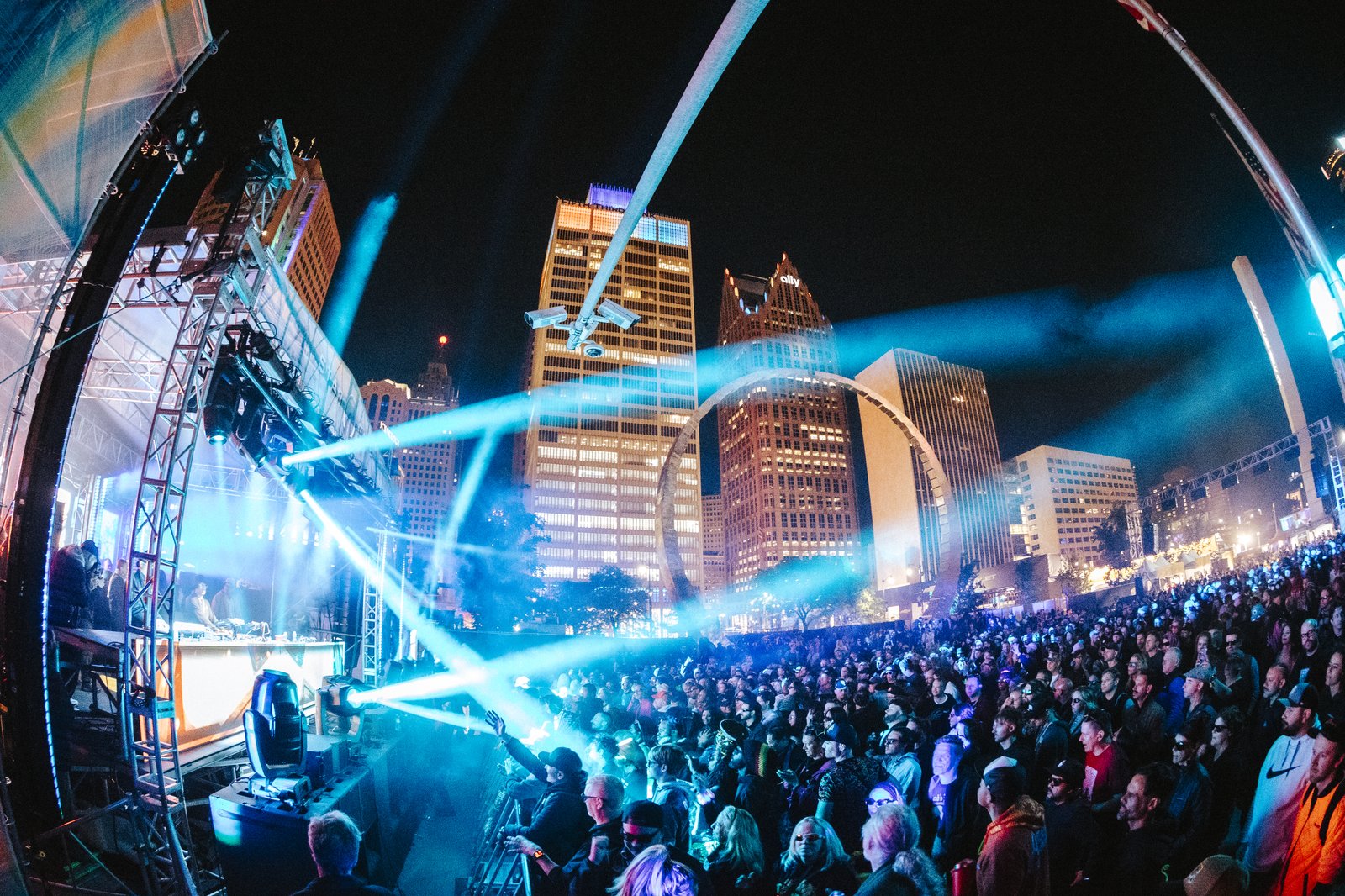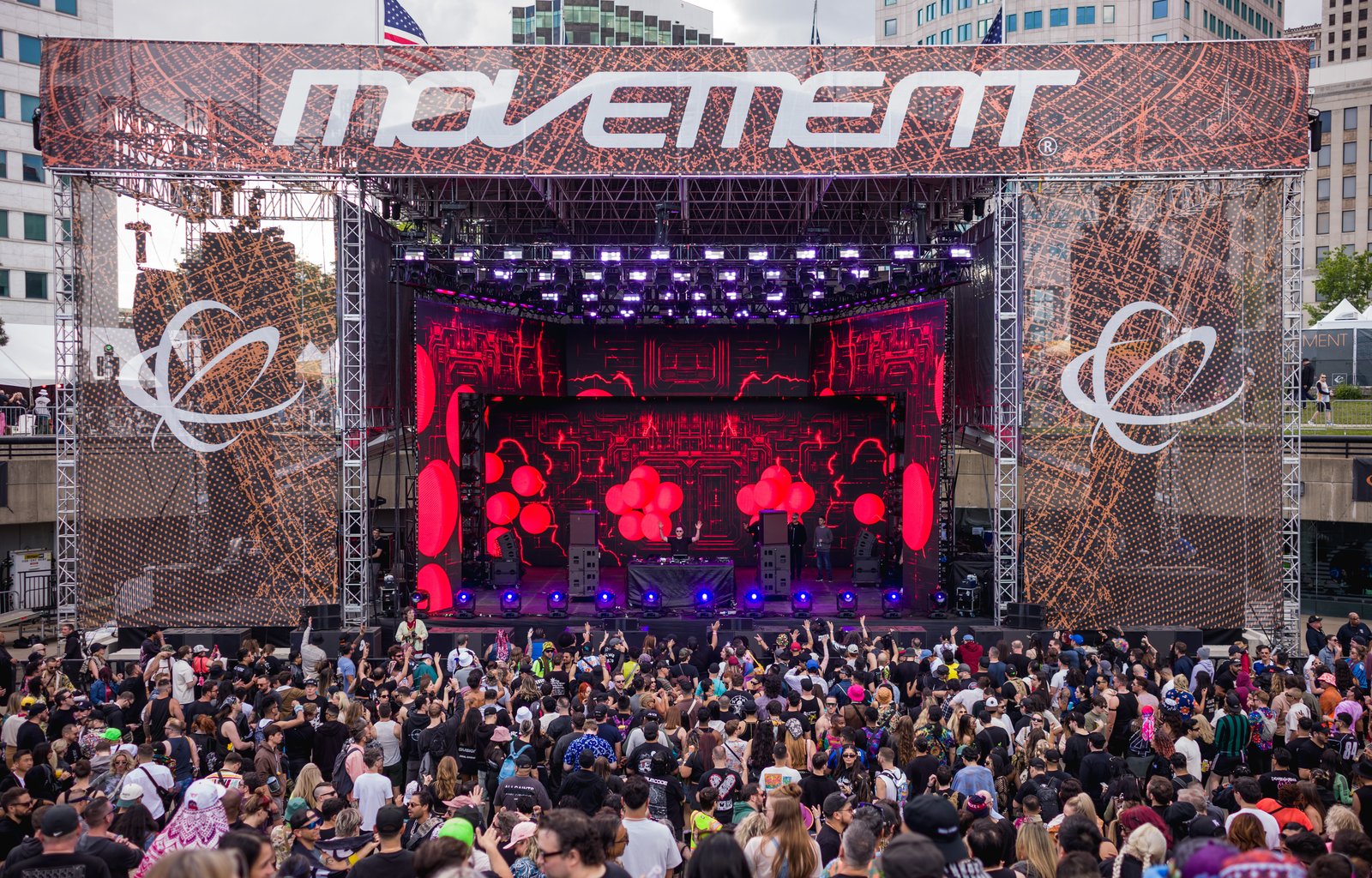
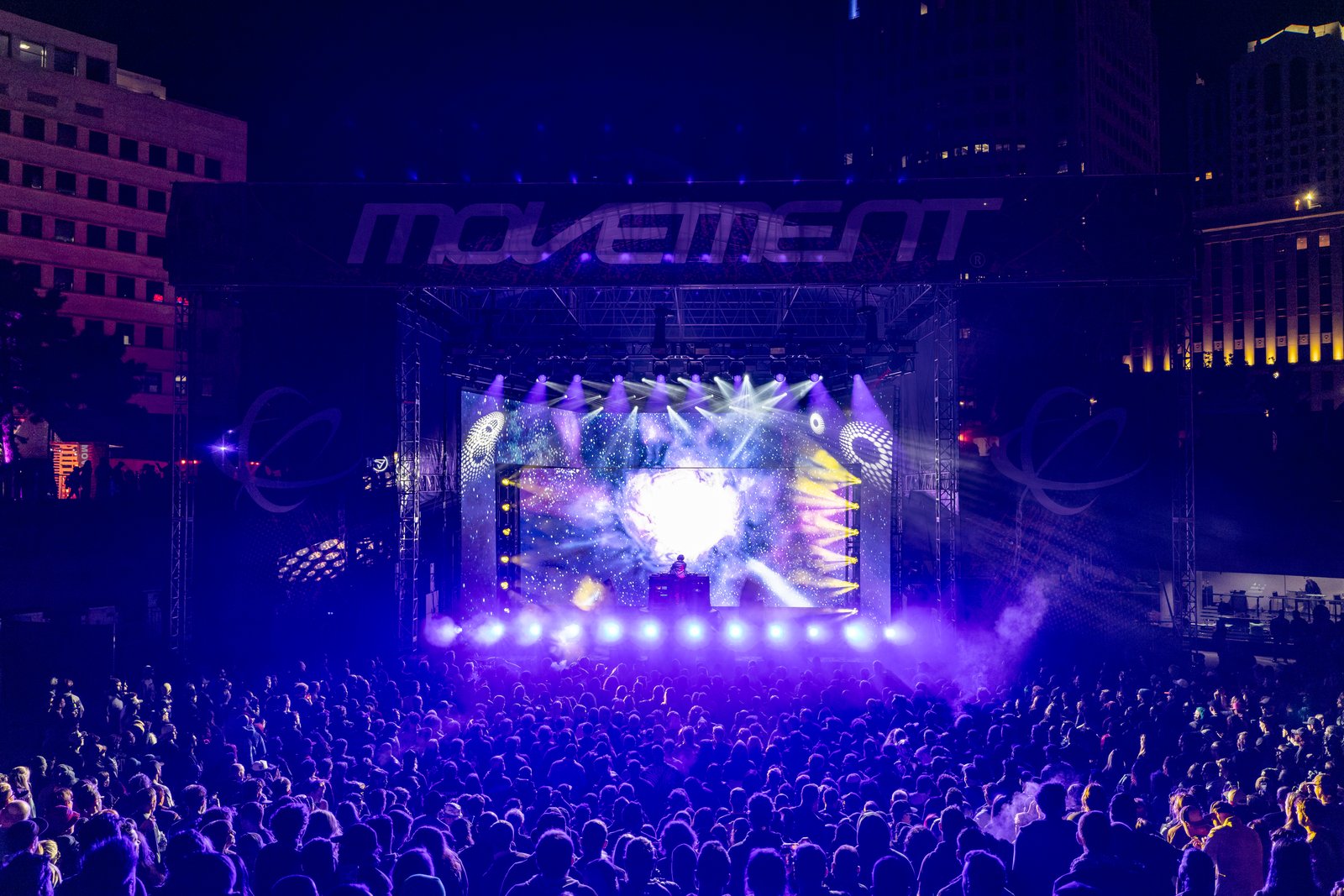
Hart Plaza opened on the Detroit riverfront in 1975. Isamu Noguchi designed it. The plaza was built for crowds — the Horace E. Dodge Fountain, the amphitheater, the open hardscape that runs from Jefferson Avenue down to the river. It hosted ethnic festivals, the Detroit Jazz Festival, the auto show overflow. Through the 1980s and 1990s it was not a techno venue. The techno was elsewhere.
The elsewhere was a rotating warehouse circuit. The Music Institute on Broadway, late 1988 to late 1989. The Shelter, in the basement of St. Andrew's Hall. The Power Plant. Cheeks. One-off raves staged in industrial buildings on the east and west sides, advertised on flyers handed out at record stores. Underground Resistance ran its own parties out of warehouse space when no club would book the music. Most of the rooms ran for a season or two, then closed.
The shift to Hart Plaza came in 2000. The City of Detroit, under Mayor Dennis Archer, agreed to host a free electronic music festival on Memorial Day weekend. The model was the existing free ethnic festivals that ran on the plaza all summer. Carl Craig was named artistic director. Pop Culture Media, run by Carol Marvin, produced the first edition. The Detroit Electronic Music Festival, DEMF, drew a credited 1.5 million across three days.
The 1.5 million number was contested at the time and is still contested. What is not contested is that the plaza could hold the crowd, that the booking — Atkins, May, Saunderson, Craig, Mills, Banks, Hood, the full Detroit canon plus the international roster they had built relationships with — was the deepest techno lineup ever staged at a city-sanctioned event in the United States, and that the city had finally given the genre a venue commensurate with its history.
The festival has changed names and operators since. Craig was dismissed after the 2001 edition, an episode that took years to resolve and is still raw in places. Pop Culture Media lost the contract. The festival ran as Movement under Derrick May's curation in 2003, as Fuse-In under Kevin Saunderson in 2004 and 2005, and then settled under Paxahau as Movement in 2006. The promoter has held the contract since.
The free-festival era ended in 2006. Paxahau put the event behind a wristband, which was the move that kept it financially viable. Local critics objected. The festival has stayed paid since.
Hart Plaza itself has not been the only venue under consideration. Belle Isle, the Riverwalk amphitheaters, and various private waterfront sites have been floated over the years. The plaza has held. Its capacity, its access, its history of holding civic crowds, and the city's existing operational template for Memorial Day weekend make it hard to replace.
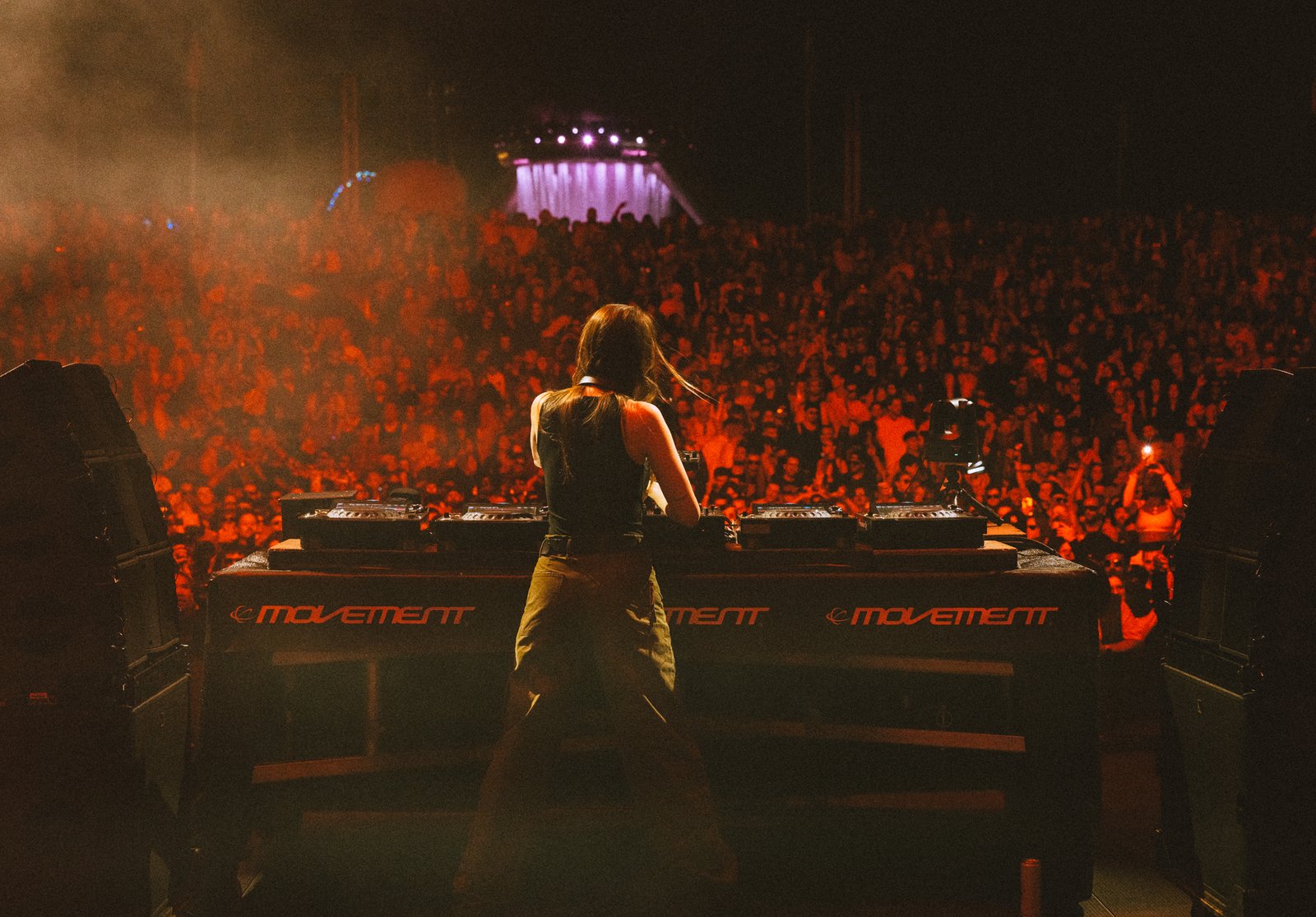
Movement returned for its 25th edition in May 2025. Hart Plaza, six stages, three days, mid-six-figure ticketed attendance. The 26th edition is scheduled for May 2026. The plaza is at 1 Hart Plaza, downtown.