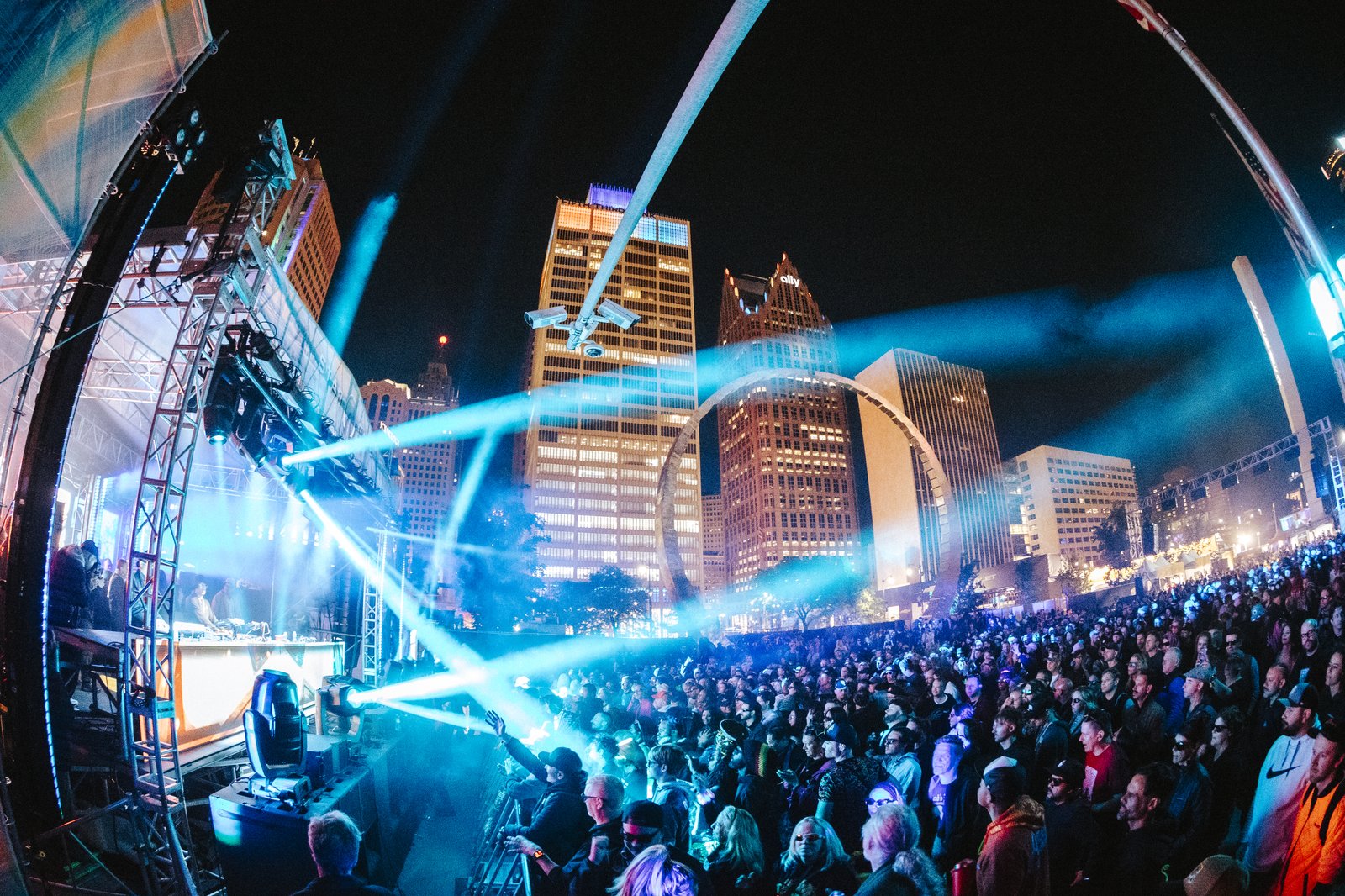
Hart Plaza covers 14 acres on the Detroit River between Jefferson Avenue and the water. It was designed by Isamu Noguchi, dedicated in 1979, and named for Senator Philip Hart. The Dodge Fountain at the center and the 120-foot stainless-steel Pylon at the western edge are the two Noguchi sculptures most visible from the street.
The plaza was built for crowds. The tiered concrete amphitheaters that step down toward the river were sized for the kind of event Hart Plaza ended up hosting most summers. The African World Festival. Concert of Colors. The Cinco de Mayo gathering. The city's New Year's gathering. Movement.
Movement is the only one of those that charges admission. The rest are free, and most of them have been on the plaza for decades. The African World Festival ran continuously at Hart Plaza for nearly three decades before relocating to the Wright Museum's grounds, then came back in 2024. Concert of Colors has been at Hart Plaza in various seasons since 1992. Cinco de Mayo, much of which now happens on West Vernor in southwest Detroit, still pulls a Hart Plaza component most years.
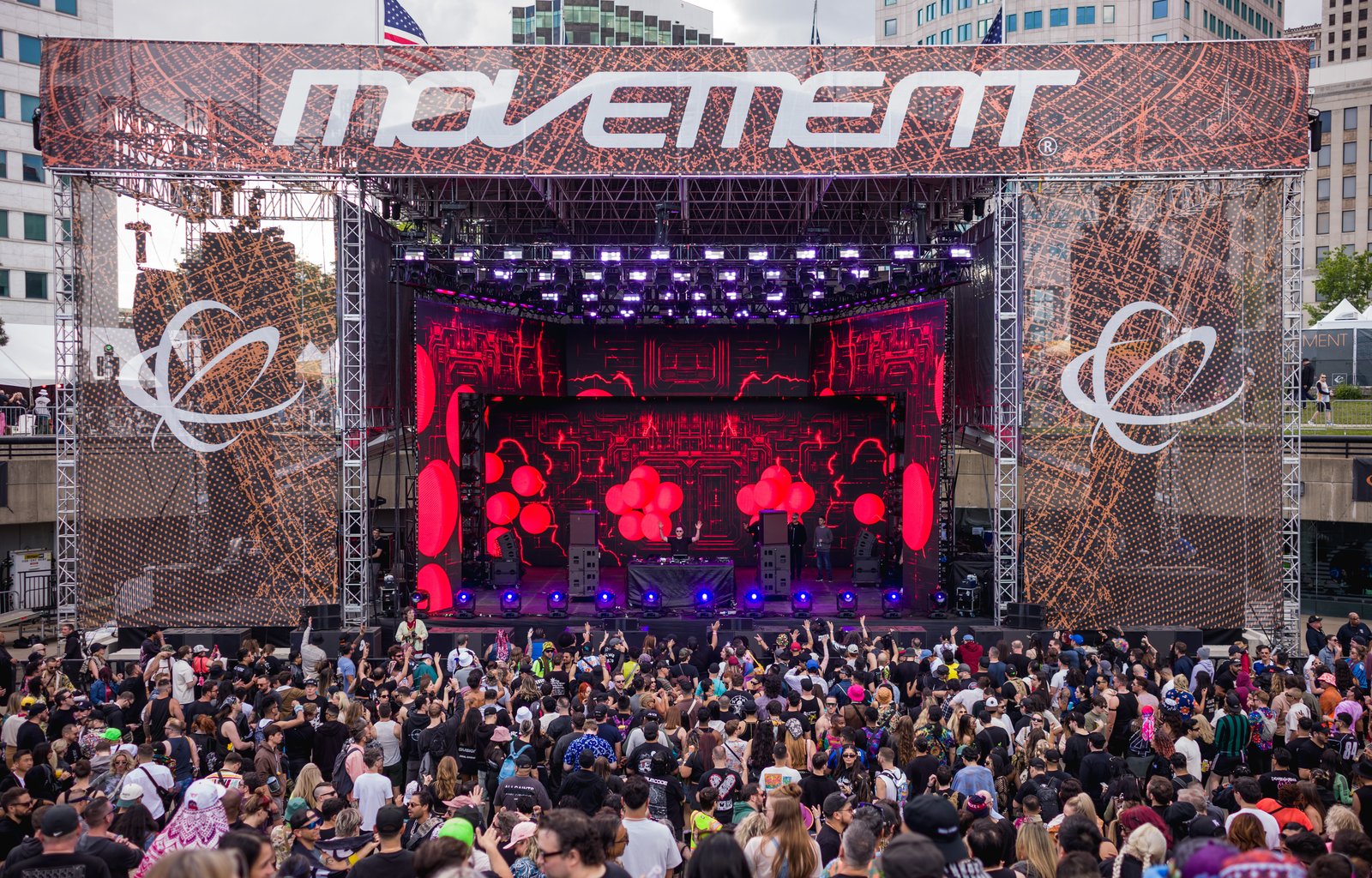
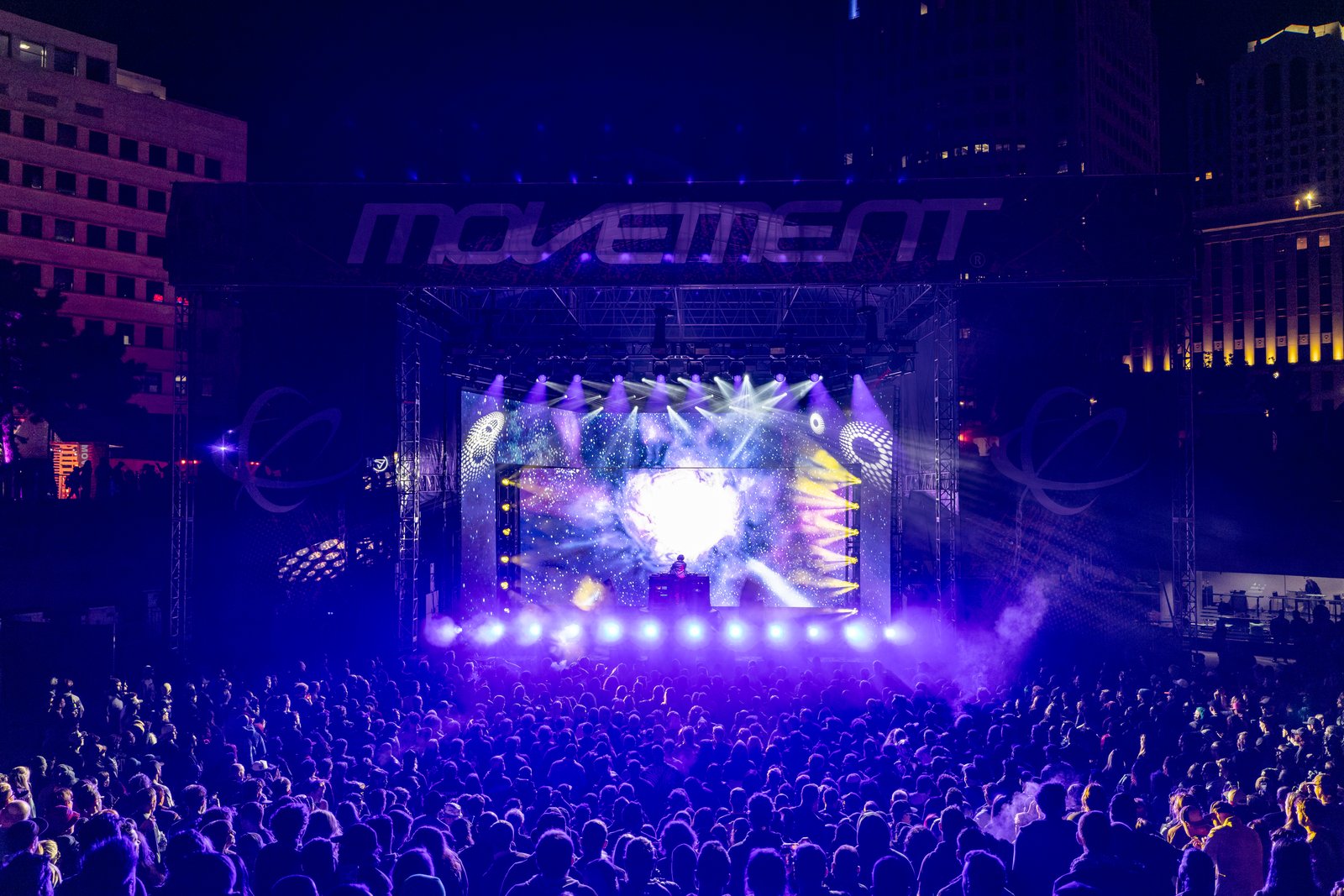
The Movement footprint takes more of the plaza than any other event. Six stages, from the upper plaza down to the Underground Amphitheater carved beneath the central platform. The Movement Stage sits where most other festivals put their main stage, the open area facing the river. The Pyramid Stage is set on the western tier. The Underground Stage is the only fully covered space, the concrete amphitheater built into the plaza's foundation. Stargate, Waterfront, and Detroit fill out the remaining tiered space.
The plaza's design is what makes the six-stage layout work. Crowds flow between stages along the concrete steps and walkways without backing up. Sight lines from the upper plaza reach the Pylon and the river. The bowl shape of the lower amphitheaters keeps sound contained even when six stages are running at once. By all accounts from previous festival operators, the layout was easier to program than what they had at the temporary sites Movement used during its years away from the plaza.
The plaza has been through renovation work in recent years under the Detroit Riverfront Conservancy. New lighting. Refreshed surfacing. Repaired tiers. The work was not the kind of overhaul that changes the plaza's character. The Conservancy's framing has been that the renovations extend the existing design rather than replace it. Noguchi's original layout still drives how the festival fits.
By Memorial Day weekend, the plaza is fenced for ticketing on the Friday before. The first Paxahau crews come through that morning. The last loadout typically wraps the Wednesday after.
The plaza dedicated in 1979. The festival arrived in 2000. Twenty-one years between Noguchi's opening and the first DEMF, twenty-six years of festival on the same concrete since.
Hart Plaza, 1 Hart Plaza, Detroit.