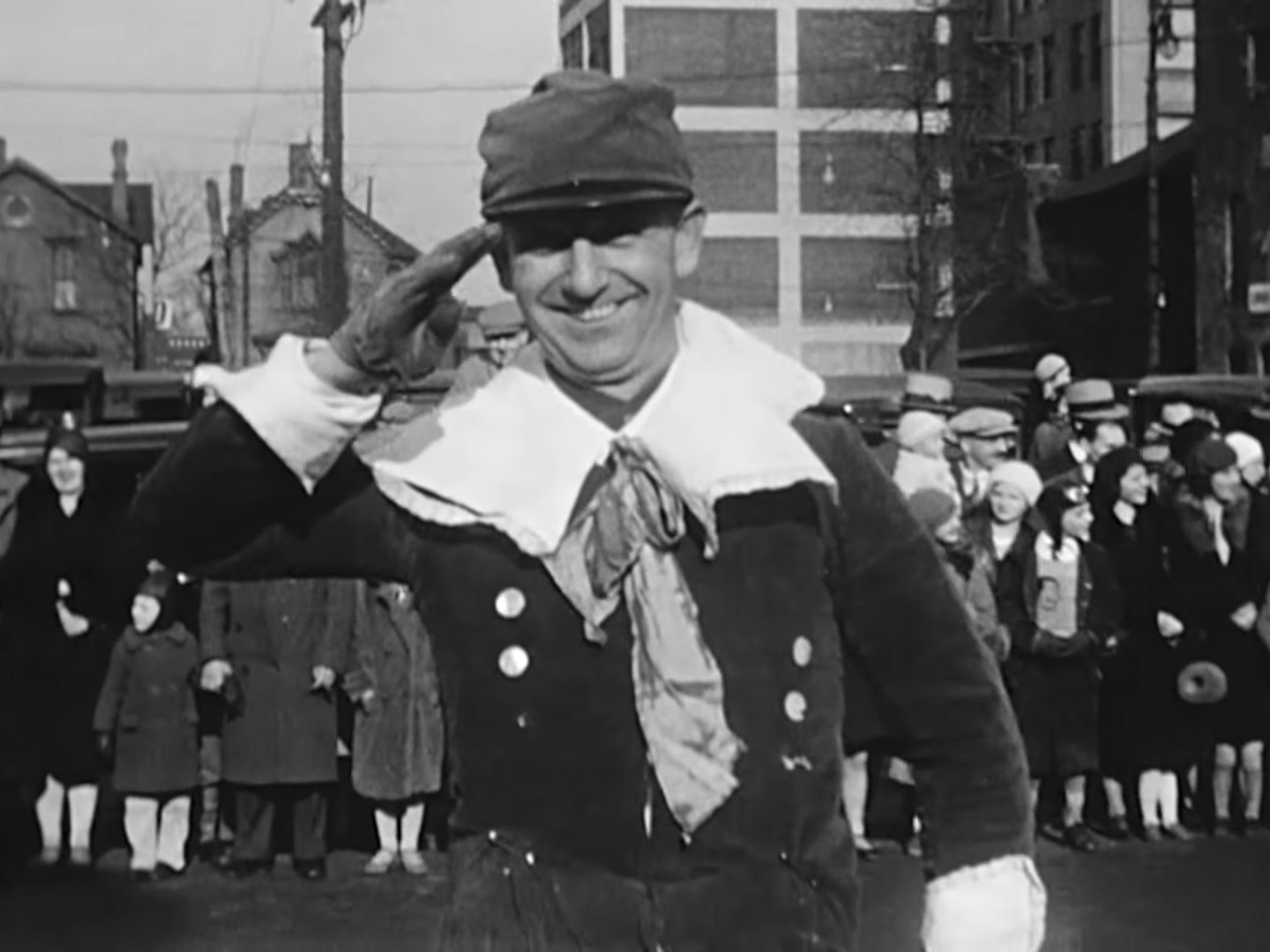
Some of the original parade heads still show Italian newspaper under the paint. The Parade Company's collection holds more than 300 heads, the largest papier mache collection in the world, and the oldest in the collection date to the 1940s. On Thursday, November 26, 2026, the Parade Company celebrates the 100th America's Thanksgiving Parade.
It was a window dresser's idea. Charles Wendel ran the displays at the J.L. Hudson Company on Woodward. He'd seen Eaton's Santa Claus Parade in Toronto and the giant carnival heads of Europe, and he pitched his bosses a parade of their own for Thanksgiving morning. The heads trace back to the Carnival of Viareggio in Tuscany, which is where Wendel got the idea on a trip to Europe. The first one marched in 1924.
The 1924 lineup was four papier mache heads made in Italy and worn by marchers, ten floats with horses pulling Mother Goose and The Old Lady Who Lived in a Shoe, four adult bands and bands from three area high schools. By 1939 more than 1,000 costumed characters walked Woodward.
Santa stepped off the last float onto Hudson's marquee in 1925 and took the key to the city. From then on the season didn't start until the mayor handed Santa the key on the Woodward marquee near Gratiot. WWJ put the parade on the radio in 1931, local television picked it up in 1948, and the national broadcast followed four years later.
Then the war shut it down. The 1942 floats went to the war effort, and shortages cancelled 1943 and 1944. Hudson's brought the parade back in 1945 and paid for it for another three decades. In the late 1970s the store went looking for other sponsors for what was then called the Michigan Thanksgiving Day Parade.
Hudson's gave it up in 1979, and Detroit Renaissance ran it until 1983, when the Michigan Thanksgiving Parade Foundation took over. The Parade Company, the foundation's operating arm, builds it in its own studio on Mt. Elliott, where artists make the floats, the balloons, the costumes and the heads.
Viareggio's artisans taught Detroit artists the craft: a sculpted face, plaster, then 17 layers of papier mache. A new head takes several weeks, and the paint goes on last. The Parade Company's artists restore the old ones in the same studio.
Since 2007 the heads have been worn by the Big Head Corps, volunteers who pay to march, and the corps has added a new head every year. Anyone can enroll online and pay the membership fee, and a member who wore a head last year gets first pick of it again. Paul W. Smith was the 2022 head and Isiah Thomas the 2023 one, after Aretha Franklin and Stevie Wonder. Barry Sanders and Bob Seger are the crowd favorites.
About half of the heads march in a given year. The rest wait in the studio on Mt. Elliott, and the older ones are retired and kept on display there.
Sources
Photo: A Hudson's big head on Woodward, c. 1924, frame from a Detroit Historical Society film via Wikimedia Commons, Public domain