Harry J. Hoenselaar is the father of the spiral-cut ham. He built it from a tire jack, a pie tin, a washing machine motor and a knife. His family says it came to him in a dream. In the 1930s he was a ham salesman in Detroit, selling hams with a honey glaze to the city's drugstores. He handed out samples at the lunch counters and showed the clerks how to slice ham off the bone for sandwiches. He was good with a knife. He knew there had to be a faster way to get the slices off.
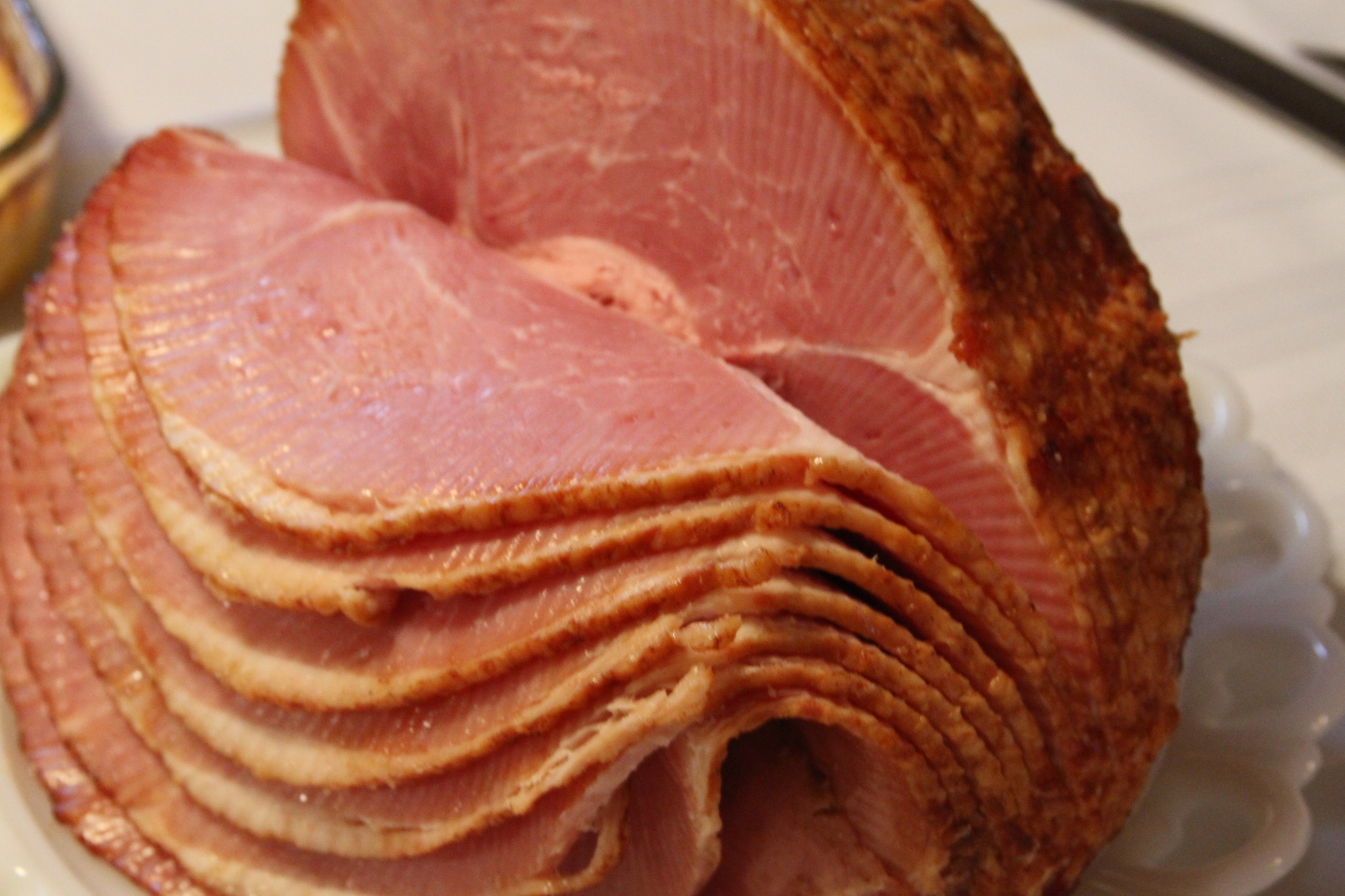
The machine grips the ham by its leg bone, spins it, and runs a knife across it in one continuous cut, so the slices come off in one spiral and stay stacked on the bone. He drew it up for a patent, then spent years trying to sell it to meat companies. He found no takers.
So he sold the ham instead. In 1957 he took a second loan on his house for $500 and bought the Detroit shop where he had once worked from the owner's widow. The first HoneyBaked Ham store opened on Fenkell Avenue that year with his four daughters working it. The Honey Baked Ham Company dates its start to that store and that year.
Hoenselaar split the country into four territories and gave one to each daughter. Honey Baked Ham Co. of Michigan started about five years after the Fenkell store. Mary and Lou Schmidt opened its second location at 29888 Gratiot in Roseville in 1972, and that store is still open.
The family still owns the company. Hoenselaar's granddaughter Linda van Rees inherited it decades after her grandfather opened on Fenkell, and in 2015 she moved the headquarters to Alpharetta, Georgia. It had 492 outlets by 2020. The Traverse City franchise alone sells 2,000 to 2,400 hams between Thanksgiving and Christmas, and the company as a whole serves more than 2.5 million customers between Thanksgiving and New Year's.
The slicer that no meat company wanted now runs in hundreds of stores. The one on Gratiot in Roseville has been turning out hams since 1972, and at its peak the store glazed, sliced and smoked 2,200 hams a day. Each ham cures for up to 24 hours, smokes over hardwood chips for 24 more, then goes through the spiral slicer. The glaze goes on by hand, one ham at a time, as many as 60 an hour in the holiday rush.
Sources
Photo: A spiral-sliced glazed ham, 2010, Flickr user jeffreyw via Wikimedia Commons, CC BY 2.0