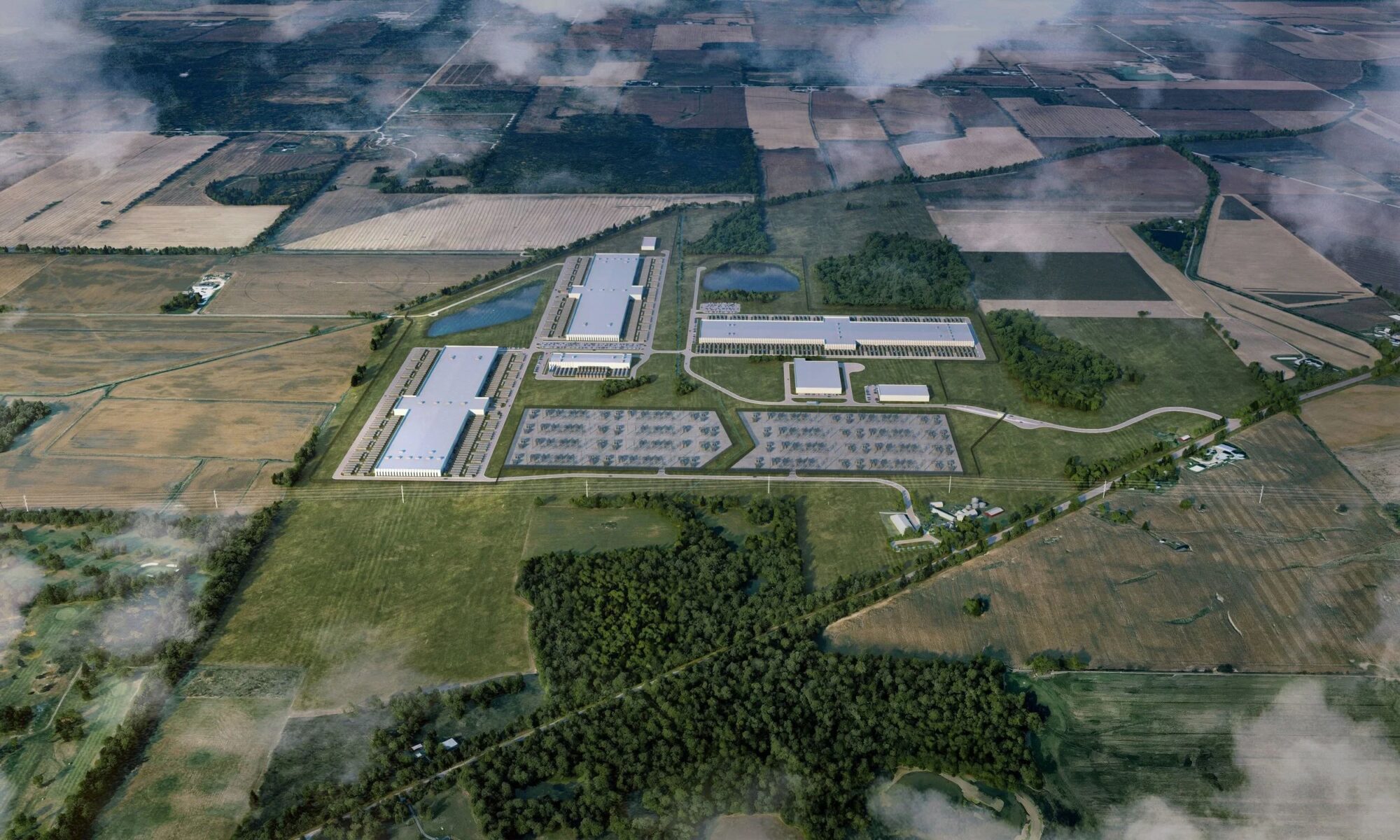
Detroit is not waiting for the data center boom to arrive before deciding how it wants to handle it.
On August 6, the City Planning Commission took up a staff report that lays out, in plain terms, how the city could define, zone, and limit the large computing facilities that have spread across Michigan over the past year. The report was written by City Planner Eric Fazzini and dated August 5, 2026, under the title "Regulation of Data Centers (Background and Preliminary Analysis)."
CPC staff has identified at least six existing data centers already operating as a principal use in Detroit. None of the six has an energy draw that exceeds 5 Megawatts, which puts every one of them in the micro or small-scale category.
Two are familiar buildings. In 2015 Quicken Loans and Bedrock completed the Quicken Loans Technology Center at 1401 Rosa Parks Boulevard in Corktown, a 66,000 square foot complex with 1.4 Megawatts of redundant power. Nearby at 615 West Lafayette Boulevard, the Albert Kahn-designed former Detroit News Building now runs as a colocation center.
That scale matters, because the facilities making headlines statewide are a different animal. The report cites the standard definition of a hyperscale data center as one with a minimum of 5,000 servers and an energy draw of at least 100 Megawatts.
Detroit may not be able to host one even if it wanted to. DTE Energy has told city stakeholders that hyperscale sites require at least 345 kilovolt transmission lines, and the highest power lines in the city are a stretch of 220 kilovolt near Evergreen Road and the I-96 Freeway.
The report also catalogs the pressure City Council has been applying. In March 2026, City Council approved a resolution urging the administration to implement a two-year moratorium on data centers so the city could study grid stability, water consumption, noise pollution, and economic impact versus land use. In July 2026, Council approved a second resolution, requested by Council Member Mary Waters, opposing "the unmitigated use of Detroit's water resources for the purpose of AI data centers" without proper monitoring. Council Member Angela Whitfield-Calloway asked staff for an inventory of existing data centers already operating in Detroit.
Water is where the numbers get vivid. The report cites a June 2026 study noting the Stargate data center in Saline Township is projected to use 10,000 to 20,000 gallons per day, while Project Cannoli in Wayne County is projected to use at least 2 million gallons of water per day.
The report is a starting point, not a finished ordinance. It offers sample zoning definitions that sort facilities by power draw, and those definitions label any data center above 20 megawatts as hyperscale, standard between 5 and 20, and micro below 5.