On Sunday, June 7, the Detroit Institute of Arts hosts a lecture about a house most Detroiters have walked past without a second look. Chase Robinson, director of the Smithsonian's National Museum of Asian Art, gives the talk, titled "Detroit and Charles Lang Freer's Vision for a National Museum." It runs from 2 p.m. to 5 p.m. in the museum's lecture hall and is free with admission.
The date marks an anniversary. In 1906, the Detroit industrialist Charles Lang Freer offered his collection of Asian and American art to the nation, a proposal he had brought to President Theodore Roosevelt the year before. The Smithsonian's regents accepted it in May 1906, taking in an inventory of more than 2,250 objects. June marks 120 years.
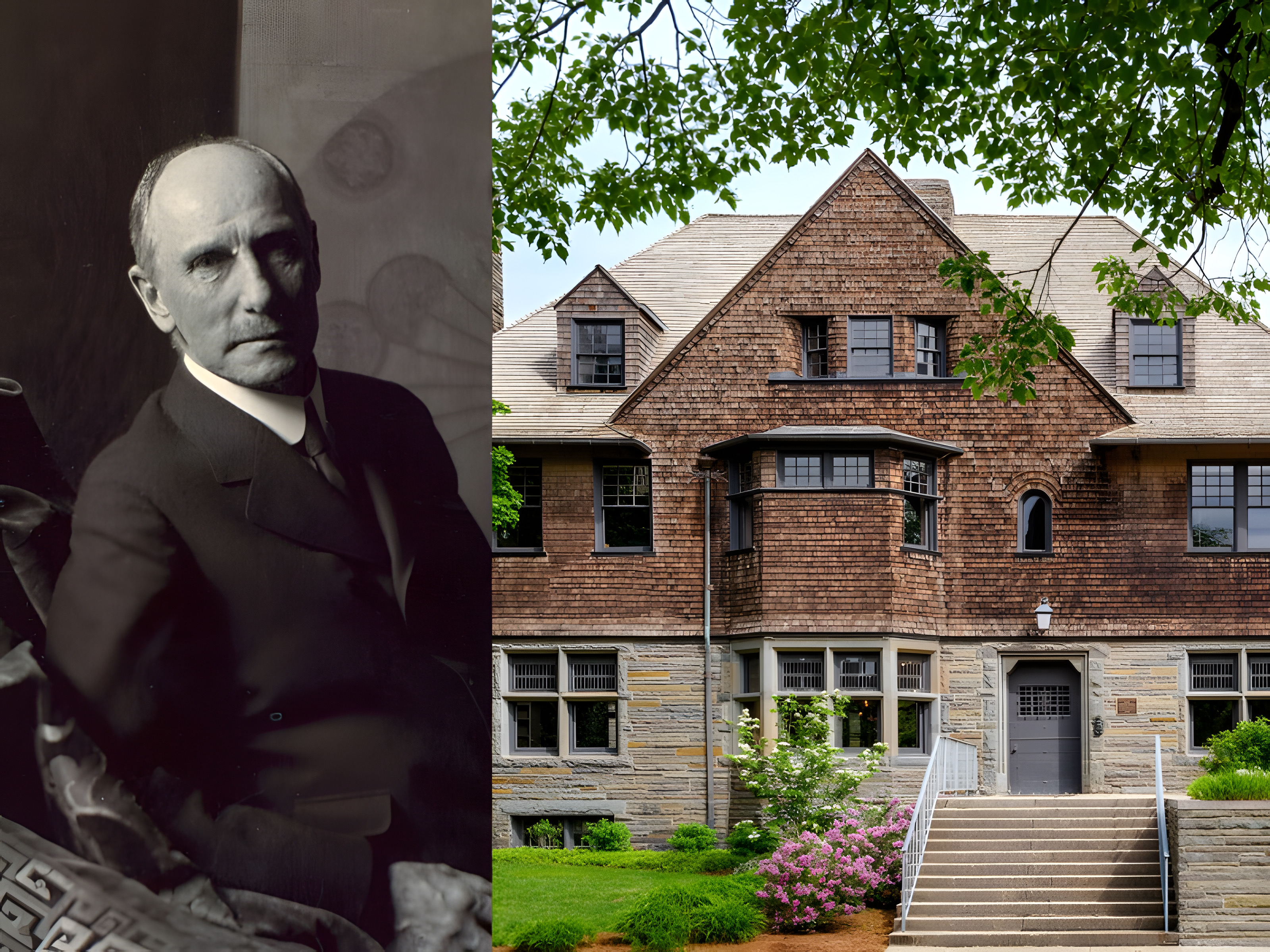
Freer made his fortune building railroad freight cars through the Peninsular Car Company, in partnership with Col. Frank J. Hecker. In 1892 he built a house at 71 East Ferry Street, designed by the Philadelphia architect Wilson Eyre. Preservationists call it Michigan's finest example of shingle-style architecture and one of Eyre's premier works. It was added to the National Register of Historic Places in 1971.
The interior was the point. Freer commissioned American painters, among them Dwight W. Tryon, Thomas Dewing, and Maria Oakey Dewing, to make work for specific rooms. The most famous piece never started in Detroit. The Peacock Room, decorated by James McNeill Whistler in London and bought by Freer in 1904, was installed in his carriage house. It now sits on permanent display at the Freer Gallery of Art in Washington.
That gallery is the thread the lecture follows. When the Freer Gallery opened in 1923, it became the first art museum on the Smithsonian campus, built in an Italian Renaissance style to hold the collection Freer had given. Today it forms half of the National Museum of Asian Art, the institution Robinson now directs. A Detroit railroad man shaped what a national museum could be, and the head of that museum is coming back to the city to say so.
The house still stands, a few blocks from the DIA. It is home to Wayne State University's Merrill Palmer Skillman Institute and opens to the public for lectures, tours, and exhibits.
The lecture is at the Detroit Institute of Arts, 5200 Woodward Avenue, on June 7, 2026.