The Heidelberg Project has a new executive director and a concrete plan to turn one of its remaining art houses into rentable space.
Colleen McLellan will lead the east side nonprofit. She steps in as Andy Sturm leaves the executive director role effective July 1. Sturm spent 17 years on the Heidelberg Project board before becoming executive director in March 2024. McLellan has spent the past 18 months working with Sturm and funders on the renovation now moving forward. She came from the Detroit Symphony Orchestra, where she was director of institutional and legislative partnerships, and brings more than a decade of nonprofit fundraising and partnership work.
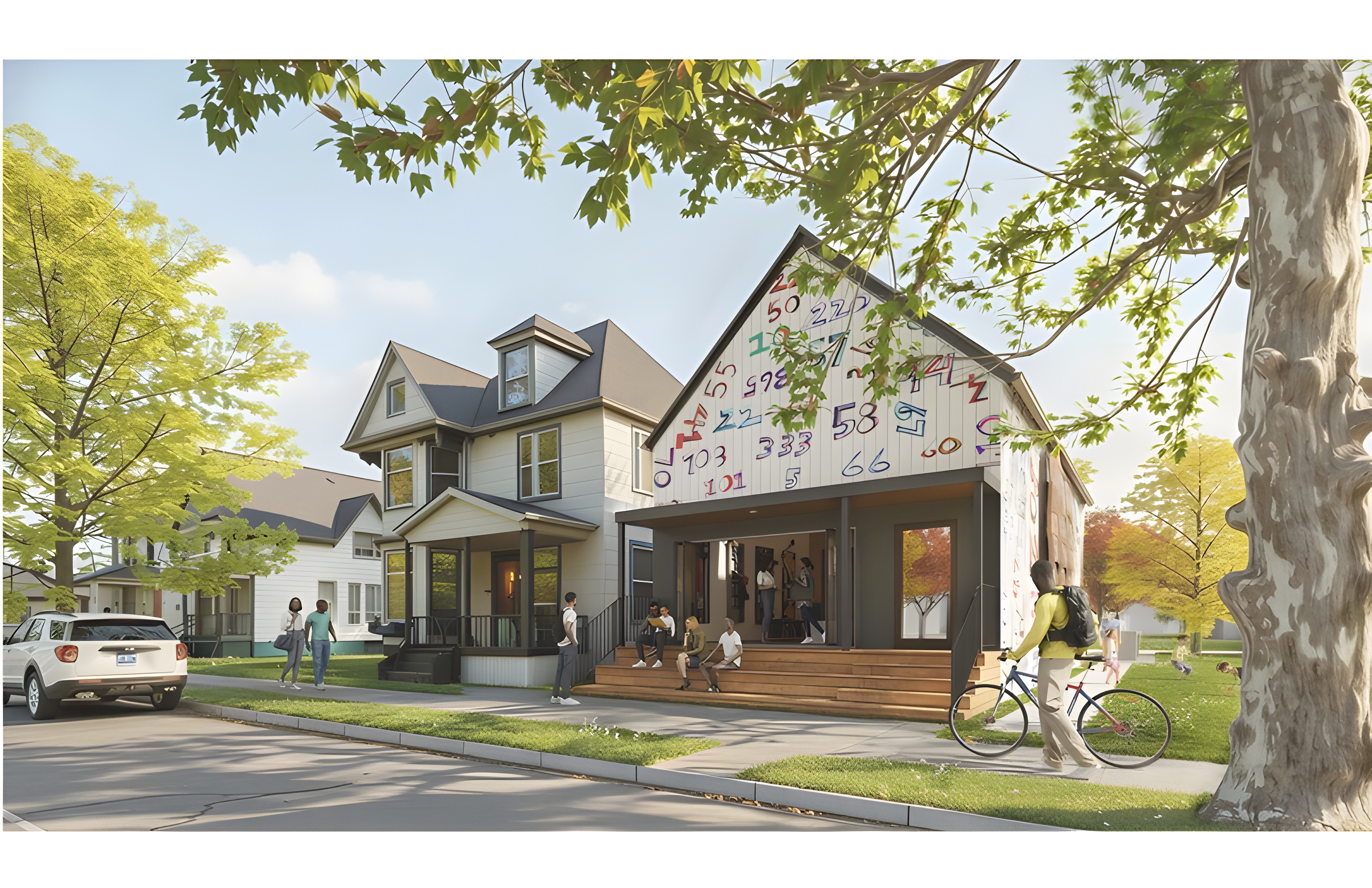
The project at the center of the transition is the Number House. The building opened as a gift shop on Heidelberg Street in 2013 and later held the POST-HAB gallery. It is one of only two of the project's iconic art houses left standing after the fires of 2013 and 2014. The plan is to rehabilitate the structure inside and out, replace electrical, gas, HVAC, and lighting systems, add an accessible bathroom and kitchenette, and restore original architectural details. Construction is budgeted at $307,000, with work planned to begin in fall 2026.
A $125,000 grant from the Gilbert Family Foundation is funding part of that work. Once finished, the Number House is meant to host programming and on site operations and to generate earned revenue through rentals to artists and small creative tenants.
"The Heidelberg Project has always been bigger than any one person," Sturm said in announcing the transition.
The Heidelberg Project began in 1986, when Tyree Guyton, working with his grandfather Sam Mackey, started painting and assembling found objects across the 3600 block of Heidelberg Street. The outdoor installation has outlasted repeated attempts to erase it. In 1991, Mayor Coleman Young ordered three of Guyton's house installations torn down. In 1999, the city demolished more of the site, including the Face House, after a judge lifted a restraining order. Twelve arsons between 2013 and 2014 took down most of the painted houses that once defined the block.
The shift toward rentable space is the most concrete version yet of a model the organization has been building toward for years. The harder question sits past the construction: whether the Number House delivers steady income without turning a public art environment into a landlord.