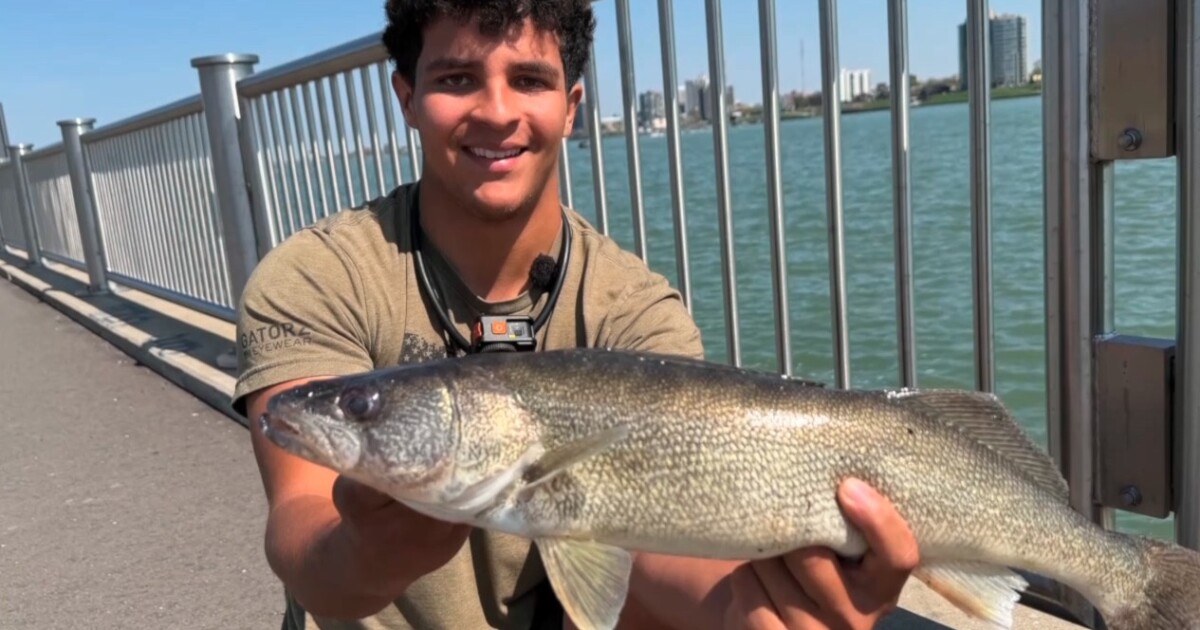
For a few weeks every spring, the Detroit River turns into one of the busiest stretches of shoreline in the city. Anglers line the seawalls and the riverfront parks from early morning, casting for walleye as the fish move up from Lake Erie to spawn. The run is an old Detroit ritual, and it is the reason the river holds a claim few places can match.
The Michigan Department of Natural Resources calls the Detroit River the largest walleye run in the world. The fish overwinter in Lake Erie, then push upriver when the water warms in spring, drawn by the heavy current that the Detroit River sends down into the lake.
The numbers are the kind that pull anglers from across the region. The DNR estimated last spring that roughly 77 million walleye overwintered in Lake Erie, and that about 14 million of them would head up the Detroit River, per reporting in Bridge Michigan. Between 10 and 20 percent of the lake's walleye run the river in a given year. The migration starts once water temperatures climb to around 40 degrees and peaks in the mid 40s, which in most years lands the heaviest fishing in mid to late April and into early May.
"About 10 to 20 percent of the walleye that overwinter in Lake Erie end up heading up the Detroit River," Jim Francis, the DNR's Lake Erie Basin coordinator, told Bridge Michigan.
If you want to fish the run from shore, the Detroit Riverfront Conservancy keeps several access points open along the Riverwalk. The conservancy lists William G. Milliken State Park and Harbor, Gabriel Richard Park, Mt. Elliott Park, and Robert C. Valade Park, along with additional spots directly off the Riverwalk. "Fishing along the Riverwalk is not only permitted, it is encouraged," the conservancy says on its visitor page.
A few rules are worth knowing before you go. Anglers 17 and older need a Michigan fishing license. On the Detroit River, along with Lake St. Clair, the St. Clair River, and Lake Erie, the walleye limit is six fish a day with a 15-inch minimum size, a special southeast Michigan regulation that runs through the end of April, after which the seasonal limit is reset. That is more generous than the statewide default, and it is one reason the spring window draws such crowds.
The river is also an international border, and the Ontario side near Windsor sits in Fisheries Management Zone 19, where the walleye season is open all year. Cross-border boat traffic on the water is heavier during the run than at almost any other time.
The run is what brings the spring tournament circuit to the western basin. National and regional walleye tours schedule Lake Erie and Detroit River events in April and May each year, timed to the migration.
The Detroit Riverfront Conservancy leans into the season with the Riverfront Fish Fest, a free family event held May 2 at Milliken State Park from 10 a.m. to 2 p.m. The day combines the conservancy's former Sturgeon Day and Kids Fishing Fest, with loaner poles, a live sturgeon, and conservation booths. Children fish free, and adults who want to cast need a valid Michigan license.
The run will hold for another stretch of weeks, then taper as the spawn finishes and the fish drop back toward the lake. Until then, the seawalls stay busy.