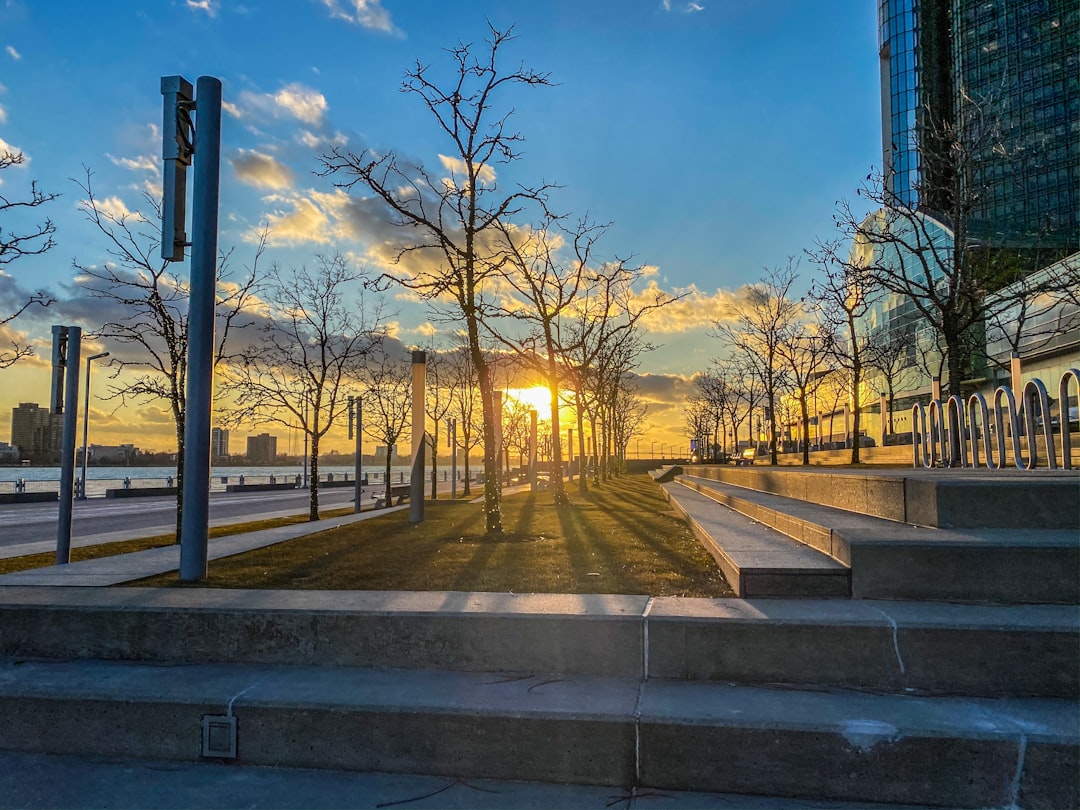
Ralph C. Wilson Jr. Centennial Park opened on October 25, 2025, on a 22-acre stretch of riverfront between 8th Street and Rosa Parks Boulevard. The Detroit Riverfront Conservancy spent $80 million and eight years on the design and construction.
What used to be a flat industrial parcel and parking lot is now Detroit's largest new public park in decades. The park is named for Ralph C. Wilson Jr., who founded the Buffalo Bills and grew up in the Detroit area.
His foundation gave $40 million in 2018 toward construction, plus another $10 million for long-term riverfront sustainability, and additional funding in 2023. The total Wilson Foundation gift across Detroit and Western New York came to $200 million. Michael Van Valkenburgh Associates, the New York firm that designed Brooklyn Bridge Park and the landscape for the Obama Presidential Center, designed the park.
David Adjaye designed the two indoor sport pavilions. The park is organized into four zones. The Delta Dental Play Garden covers about five acres and includes three oversized Monstrum sculptural play structures shaped like animals, plus smaller play areas drawn from sketches by Detroit kids.
The Huron-Clinton Metroparks Water Garden spans 2.5 acres and is the first Huron-Clinton location inside the city, with a weir that pumps Detroit River water in and back out. The William Davidson Sport House holds basketball courts. The Performance Lawn is for events and movies.
The park has nearly 40,000 native plants. That includes 967 trees, 2,413 shrubs, and roughly 39,000 perennials and grasses. Some were grown specifically for the project.
About a hundred yards of shoreline are open for fishing. The opening connects an unbroken chain of riverfront walking paths. The park sits at the western end of the Riverwalk, which now runs east toward Gabriel Richard Park as continuous public access.
It links to the Southwest Greenway running north toward Michigan Central Station, which then ties into the Joe Louis Greenway loop. The Conservancy maintains seven miles of public riverfront access in total. Most of the construction money was philanthropic.
Some came through public sources. The two-day grand opening drew the Detroit Harvest Fest, which moved to the new park to celebrate. 1801 W. Jefferson Ave., Detroit
 By Samantha
Guest Writer · October 25, 2025 · 2 min read
By Samantha
Guest Writer · October 25, 2025 · 2 min read