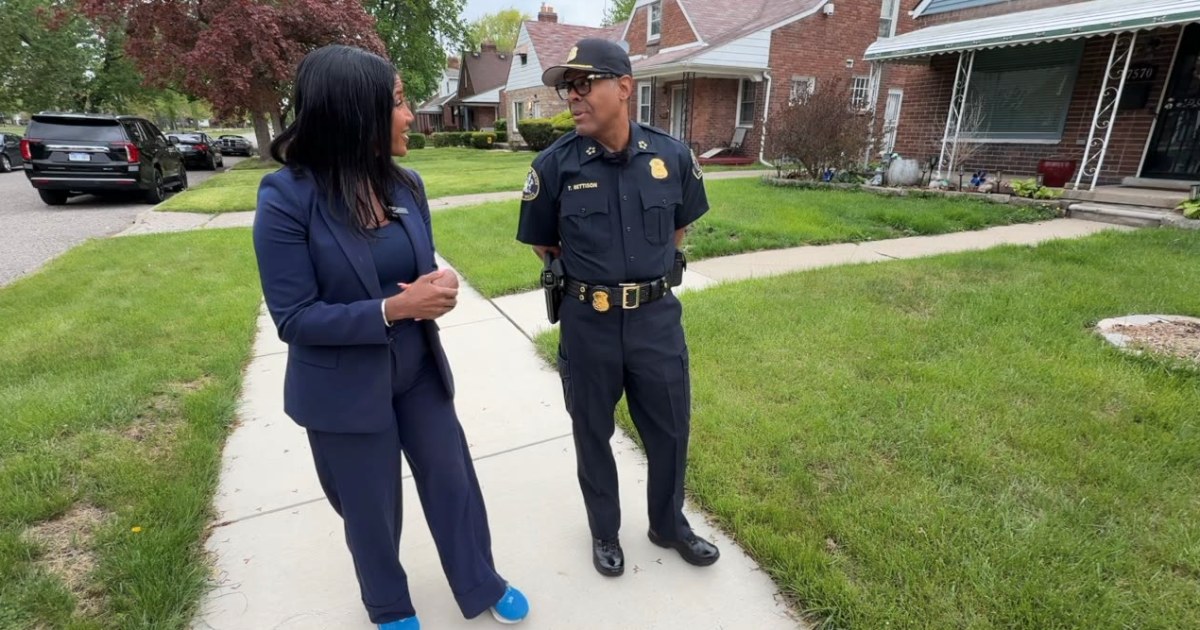
Walk a Mile Wednesday returned this week with the Detroit police chief and city leaders walking a neighborhood route with residents. The program runs Wednesday afternoons through the spring and summer, rotating between neighborhoods and pulling in the precinct command staff, the mayor's office, and elected representatives.
The format is simple. A one-mile loop. A roster of city leaders and uniformed officers. Residents who want to walk with them and ask questions on the move. The format has held since the program's earlier iterations under previous administrations, with the current version run as a public-engagement tool rather than a press event.
Detroit's community-policing apparatus operates on multiple tracks. Neighborhood Police Officers run precinct-based assignments. Project Greenlight runs the camera partnership with private businesses. Cease Fire and Operation Restore Order are the violence-intervention tracks. Walk a Mile sits across all of them as the public-facing layer that depends on showing up.
The program does not produce data the way the other tracks do. There is no arrest count, no closure rate, no measurable enforcement output. What there is is a recurring direct contact between residents and the people who run the department. That is the program.
WXYZ's coverage this week framed it as an effort to strengthen community trust. That framing has been around the program since the early 2010s. What has changed is the volume of complaint that residents bring on the walks. Encampment removals, response times, traffic enforcement, and youth-takeover incidents have all surfaced in the route conversations this spring.
The walks continue through the warmer months and rotate through the city's neighborhood patrol zones. The schedule is published on the department's website and on the participating council members' social channels.