Kenny Dixon Jr. has been releasing as Moodymann since the early 1990s. The Detroit house producer has done it through one label — his own KDJ — and a refusal to leave the city, the catalog, or the format.
Dixon was born in Detroit and grew up on the city's east side. The biographical detail he has shared in public is limited, deliberately. He started releasing twelve-inches as Moodymann in the mid-1990s on KDJ, and the label has carried most of his catalog since. Mahogani Music, the sub-label, opened in the early 2000s and adds the more song-format releases.
The records sit somewhere between deep house, soul, and Detroit funk. Dixon samples Marvin Gaye, José James, Donald Byrd, and the city's R&B catalog without apology and without a license library. The early KDJ vinyls circulate in small runs and have moved through the secondary market at premium prices for nearly thirty years. The album discography is short and load-bearing: "Silentintroduction" in 1997 on Planet E, "Forevernevermore" on Peacefrog in 2000, "Black Mahogani" on Mahogani in 2004, the self-titled "Moodymann" in 2014.
The 2014 Boiler Room, recorded at Dixon's own house in Detroit during Movement weekend, is the documentary record most often cited by people who want to point at how he works. The room is a basement converted into a studio. The set runs four hours. Dixon plays records, talks to the camera in fragments, and at one point reads into the microphone from a sheet of paper about the music industry. The set has been viewed in the millions.
The persona is part of it. Moodymann performs in sunglasses and obscure stage-wear, gives few interviews, and treats the press request as a transaction he is not particularly interested in completing. The position is consistent enough that the underground status is not a marketing decision; it is the actual shape of the career.
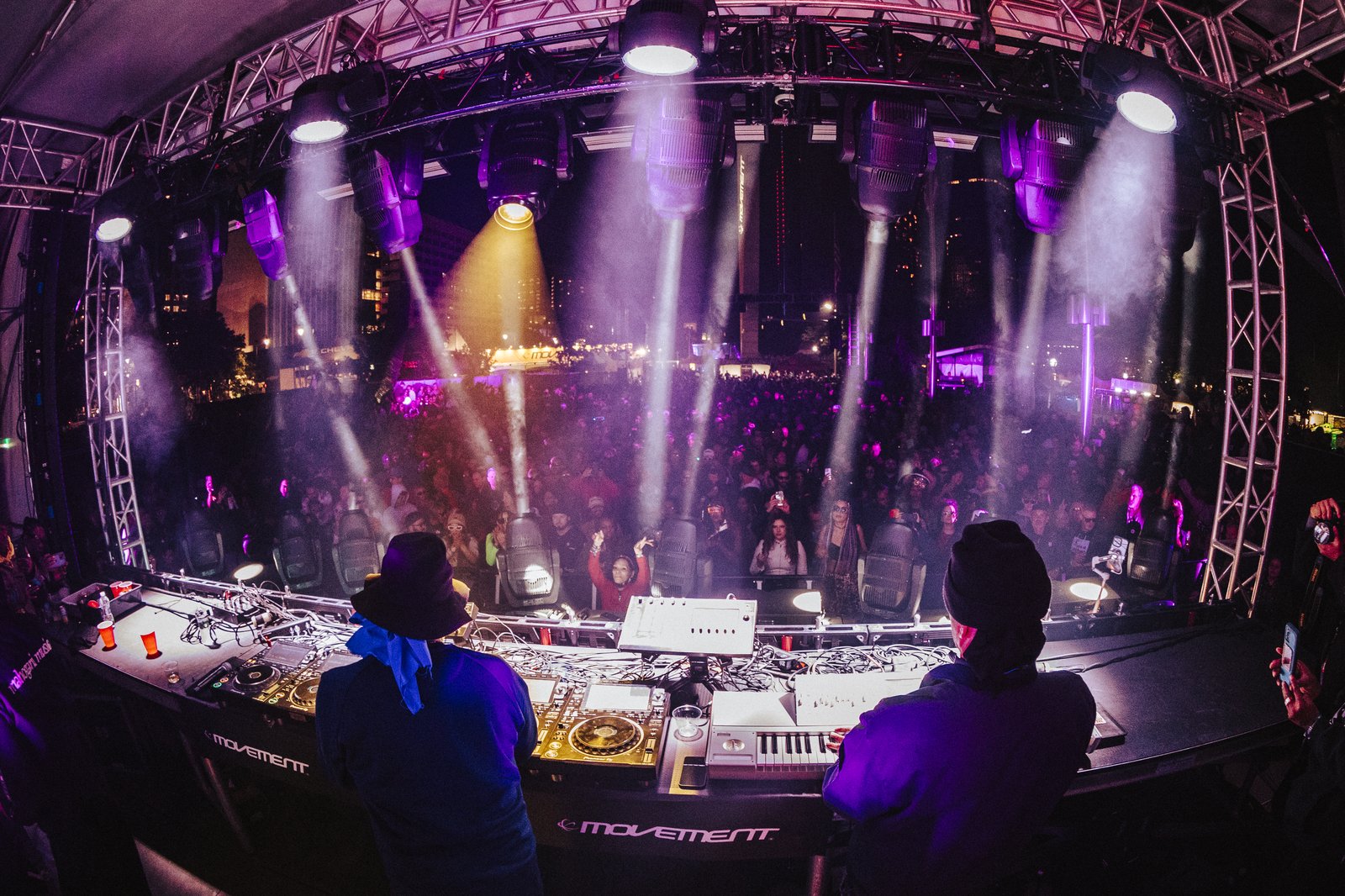
Mahogani has put on showcases at Movement most years and runs nights at Detroit venues including Lincoln Factory and TV Lounge. Dixon plays Hart Plaza most Memorial Day weekends. He has shared the booth with Carl Craig and Mike Banks at multiple Movement closing sets across the festival's last decade.
He has stayed in Detroit. The studio is in the house. The label runs out of the same neighborhood. The records keep coming at the cadence he picks, not the one streaming services would prefer. The catalog is too long to summarize and too consistent to anthologize, which seems to be the point. Dixon has said in print that he does not want a best-of.
KDJ's most recent twelve-inch landed earlier this fall. Vinyl is still the default format. Picking it up usually means a record store, not a download.