Chicago house and Detroit house are usually filed as the same lineage. They are not. The two cities share a starting decade and a roster of mutual influences, then diverge sharply around 1990 in ways that still define both scenes.
The Chicago story is documented. Frankie Knuckles spinning at the Warehouse from 1977. Ron Hardy at the Music Box from 1983. Larry Heard, Marshall Jefferson, Steve "Silk" Hurley, the Trax Records and DJ International catalogs that came out of the city through the mid-1980s. Chicago house is structurally a 4/4 dance music with disco roots, drum-machine production, and a vocal tradition borrowed directly from Black Chicago church music. The format settled fast and exported to the UK first, then everywhere.
Detroit was paying attention. Juan Atkins, Kevin Saunderson, Derrick May — the Belleville Three — were drawing on the same Italo and Eurosynth references the Chicago producers were and feeding the records back into Detroit's high-school dance scene. The Music Institute, the Detroit techno club Chez Damier and Alton Miller ran from 1988 to 1989, played Chicago house alongside the new Detroit techno on the same nights. The two scenes overlapped at the booth.
The divergence runs through tempo, texture, and the role of the vocal. Detroit house, when it became a recognizable strand, slowed down. Inner City — Saunderson and Paris Grey — released "Big Fun" in 1988 with a vocal Chicago could have made, but the production was already moving toward something jazzier and less dancefloor-direct. By the early 1990s the Detroit house catalog was running on deeper basslines, longer arrangements, and sample beds drawn from Detroit's own soul, jazz, and funk records. Marvin Gaye, Donald Byrd, Eddie Kendricks. The Chicago tradition was building on disco loops; the Detroit one was building on Detroit's own R&B archive.
Theo Parrish and Moodymann are the sharpest examples. Parrish came from Chicago and brought the influence with him; once Sound Signature was running in 1997, the records sounded Detroit, not Chicago. Moodymann had been in the city the whole time. KDJ's catalog, almost from the first release, used Detroit soul samples in a way Chicago house did not. The Detroit version of the form was always going to be slower and more melodic.
Mike Huckaby is the third name. Huckaby grew up in Detroit and ran his Reset and S Y N T H labels with a New York deep-house gravity that read as Detroit by zip code rather than by sample choice. The format was looser, the BPM lower, the textures more dub-influenced.
The genre-defining records hold up the difference. Chicago house: "Move Your Body," "Promised Land," "Can You Feel It." Detroit house: "Big Fun," "Forevernevermore," "Parallel Dimensions." One catalog moved bodies through energy. The other moved them through depth.
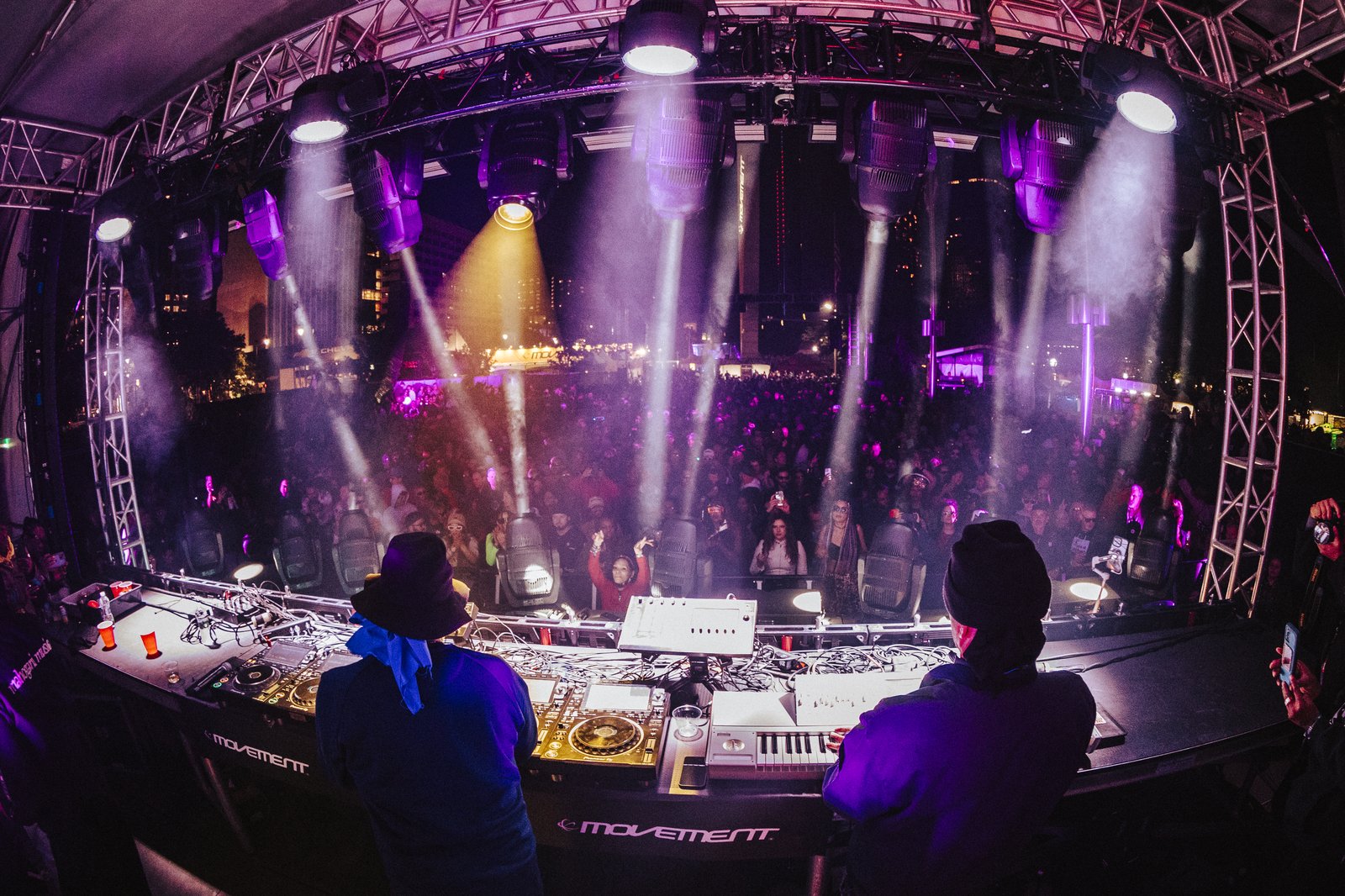
Both cities still trade DJs and records. Movement bookings include Chicago names every year, and Chicago festivals book Detroit names back. The lineages are intertwined, but they have not merged. Three decades on, they still produce different records.