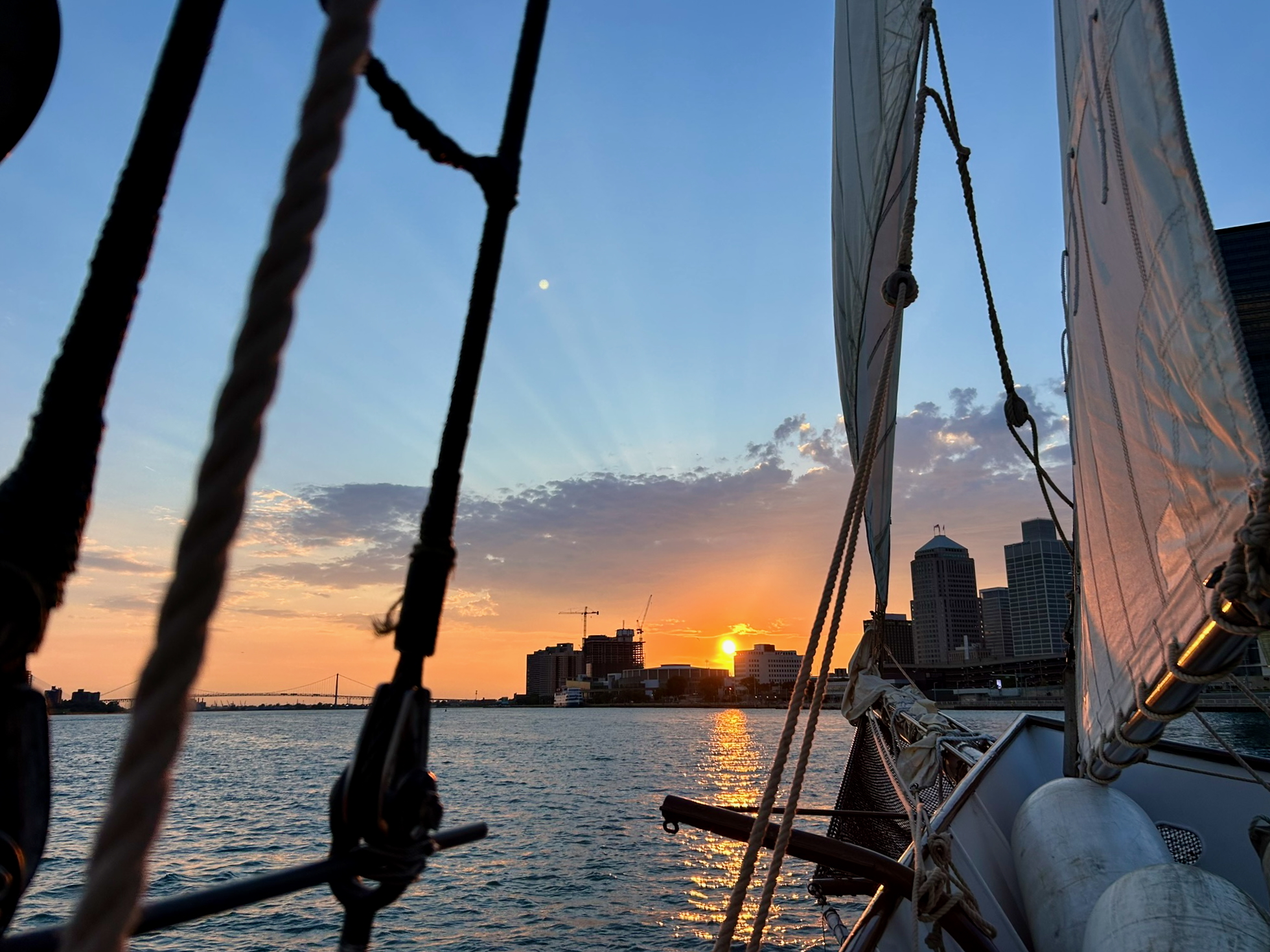
For most of a century, the Detroit River has been treated as a working corridor, a place to move freight, cool machinery, and absorb what heavy industry left behind. Now a coalition of researchers, Indigenous organizers, and neighborhood advocates is asking whether the river itself could hold rights in a courtroom.
The push to explore legal personhood for the Detroit River was first reported by Planet Detroit. The designation would give the waterway legal standing, meaning people could go to court on its behalf to fight pollution and harmful development.
The coalition draws in groups that already work the water's edge. Raquel Garcia, executive director of Southwest Detroit Environmental Vision, and Paul Draus, a board member of Friends of the Rouge, are among the local voices, alongside advisors from the Community Environmental Legal Defense Fund (CELDF), which helped a Pennsylvania borough pass the first such U.S. ordinance in 2006, according to Planet Detroit.
Indigenous advocates frame the question as one of relationship. "Anishinnabe people also historically used the river to trade, eat, hunt, and live, but recognize these things as gifts and not privileges," Jared Ten Brink, of the Nottawaseppi Huron Band of the Potawatomi, told Planet Detroit.
The approach has hit hard legal walls elsewhere. The rights of nature idea has gained ground globally, from Ecuador enshrining it in its constitution in 2008 to New Zealand granting the Whanganui River legal personhood in 2017, according to Planet Detroit.
The stakes are concrete on the river's Downriver stretch. On June 29, 2026, the EPA approved a plan to stop contaminated groundwater from leaving BASF's North Works site in Wyandotte, a roughly 230-acre parcel used for industry since the 1800s.
"The timing could be just right to try to utilize this approach by aligning communities, goals, and narratives around the river," Mike Shriberg, director of the University of Michigan Water Center, told Planet Detroit.