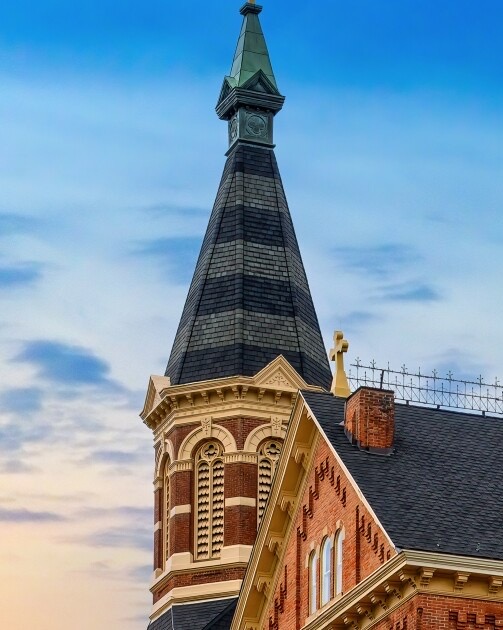
For Catholics across southeast Michigan, weekend Mass has been one of the steadiest fixtures of community life. The Archdiocese of Detroit is now reshaping where and how that Mass happens, and for some parishes the change could arrive within the next two years.
Under proposed models the archdiocese released this spring, at least 58 parishes would no longer host weekend Mass. That figure has grown as planners worked through draft after draft, and it remains a proposal rather than a final decision.
What halting weekend Mass means
Ending weekend Mass at a building is not the same as closing it. Archdiocese officials have said churches without a scheduled weekend Mass could still host weddings, funerals, weekday liturgies and other gatherings at a pastor's discretion, and some could be kept for baptisms or religious education. Officials have also been candid that some buildings will close, because the archdiocese cannot keep funding the upkeep of every structure.
The plan moves the archdiocese to a "pastorate" model. As the archdiocese describes it, a pastorate is a grouping of one or more parishes led by a single pastor and his team. Mass would concentrate at one or a few sites within each grouping while other buildings stay active for different uses.
Why this is happening
The archdiocese points to long declines in attendance, ordinations and money. About 50 years ago it counted roughly 1.5 million Catholics. Today the number is near 900,000, with an estimated 150,000 attending Mass regularly. Weekly attendance has fallen about 40 percent since 2011. The archdiocese has 209 parishes, many of them drawing small weekend crowds, and it carries about $94 million in unfunded building repairs.
The priest shortage drives the rest. The archdiocese projects that by 2034 only about 134 priests will be available for active ministry, a drop of roughly 40 percent from today, as older priests retire faster than new ones are ordained. Every weekend Mass needs a priest, so concentrating where Mass is held becomes a question of arithmetic.
Where things stand
Archbishop Edward J. Weisenburger announced the two-year process in a message read at Masses the weekend of November 15 and 16, 2025. Each parish was placed in one of 15 planning areas, with multiple models drawn up for each. Every parish held two listening sessions this spring so parishioners could weigh in on the proposals, and feedback channels stayed open into the summer.
The archbishop's decisions are expected in early 2027, with changes beginning that July. Until then, the most familiar parts of parish life are still on the table, and parishioners still have a window to be heard.