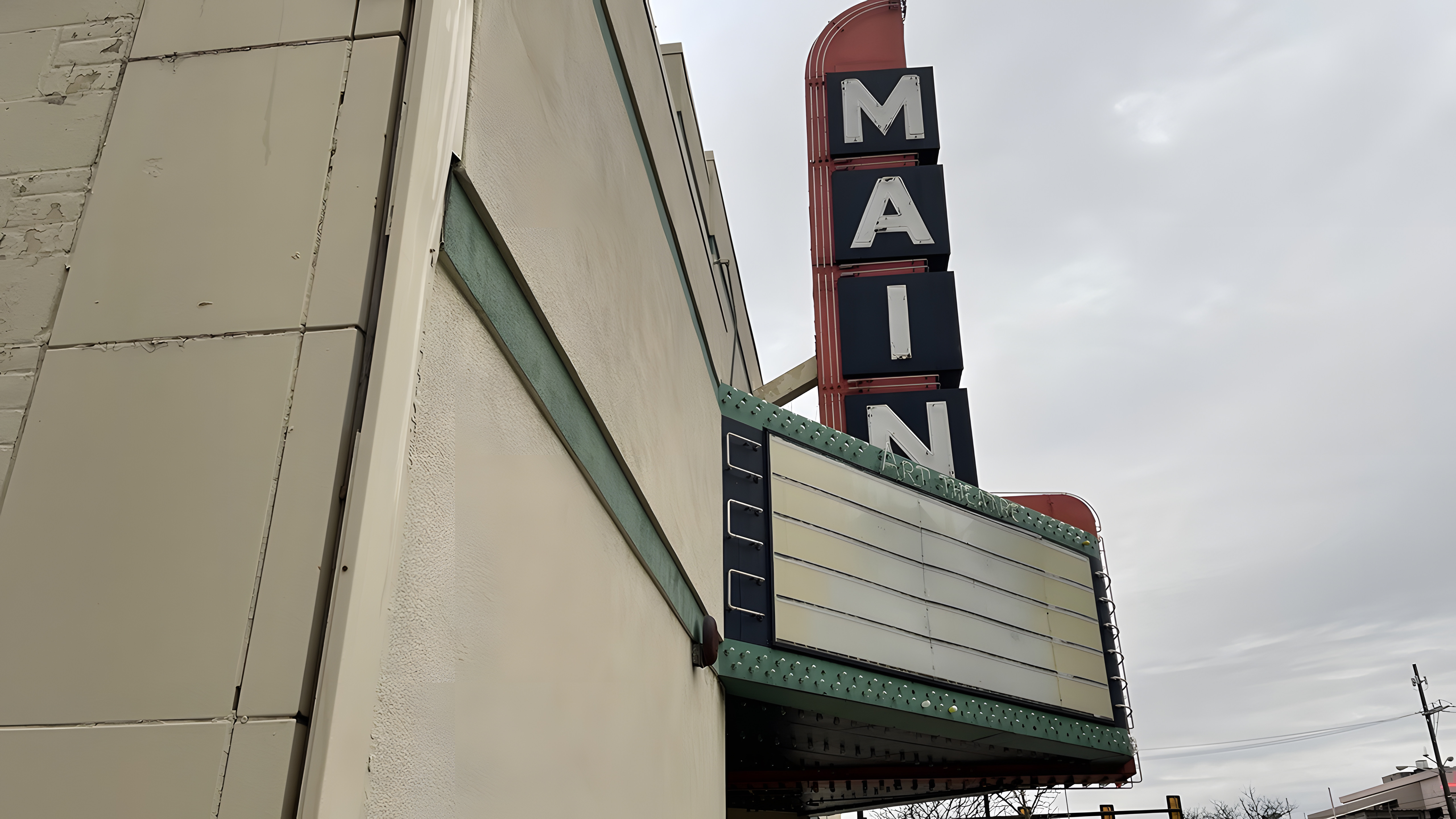
John Monaghan and Kevin Maher started Motor City Cinematheque because the rooms that used to handle the films they care about are gone.
The Main Art Theatre in Royal Oak opened in 1941 and spent its last four decades as an art house, showing independent and foreign films plus weekend midnight screenings. Landmark Theatres ended its lease in June 2021. A demolition crew took the building down on July 25, 2022, and a mixed-use apartment complex went up on the lot. Cinema Detroit, a nonprofit that ran seven days a week in Midtown for about a decade, closed its permanent space in 2023. Owner Paula Guthat now stages screenings pop-up style, in borrowed venues when the schedule and the room allow. There is no fixed calendar and no marquee.
Both theatres did the same job. They kept a category of film in reach, the independent and foreign work that does not get steady commercial distribution in most American cities. For Detroit audiences they were the difference between catching that work on a real screen or not at all. When they stopped operating as standing institutions, the access went with them.
Motor City Cinematheque is Monaghan and Maher's answer. Monaghan, a film historian and former Detroit Free Press critic, and Maher, who spent years in studio home entertainment and holds a film degree from Wayne State, built a screening series that moves across the metro area instead of holding down one address. Monaghan talked through the project on WDET's The Metro on May 12, describing it as a way to support independent and art films and the theatres that still show them.
The format is the point. The series does not pay rent and it does not depend on a single building staying standing. Recent and upcoming dates run through suburban and city rooms alike: a mystery screening at the Farmington Civic Theater, "A Man Called Adam" at a Detroit brewery, talks at area libraries, and Noir City Detroit at the Redford Theatre in September. The venues change. The programming holds.
Detroit has kept cultural formats alive through transitions that ended their fixed homes before. The pitch here is simple. Tearing down the Main Art did not erase the audience it built over 80 years, and moving Cinema Detroit to pop-ups did not dissolve the people who showed up for the programming. Motor City Cinematheque is a bet that the audience scattered but did not leave.
Monaghan's conversation on The Metro is available on demand through WDET.org and the usual podcast apps. The Metro airs weekdays from 10 a.m. to noon on 101.9 FM. Screening dates and venues are posted at motorcitycinematheque.org.