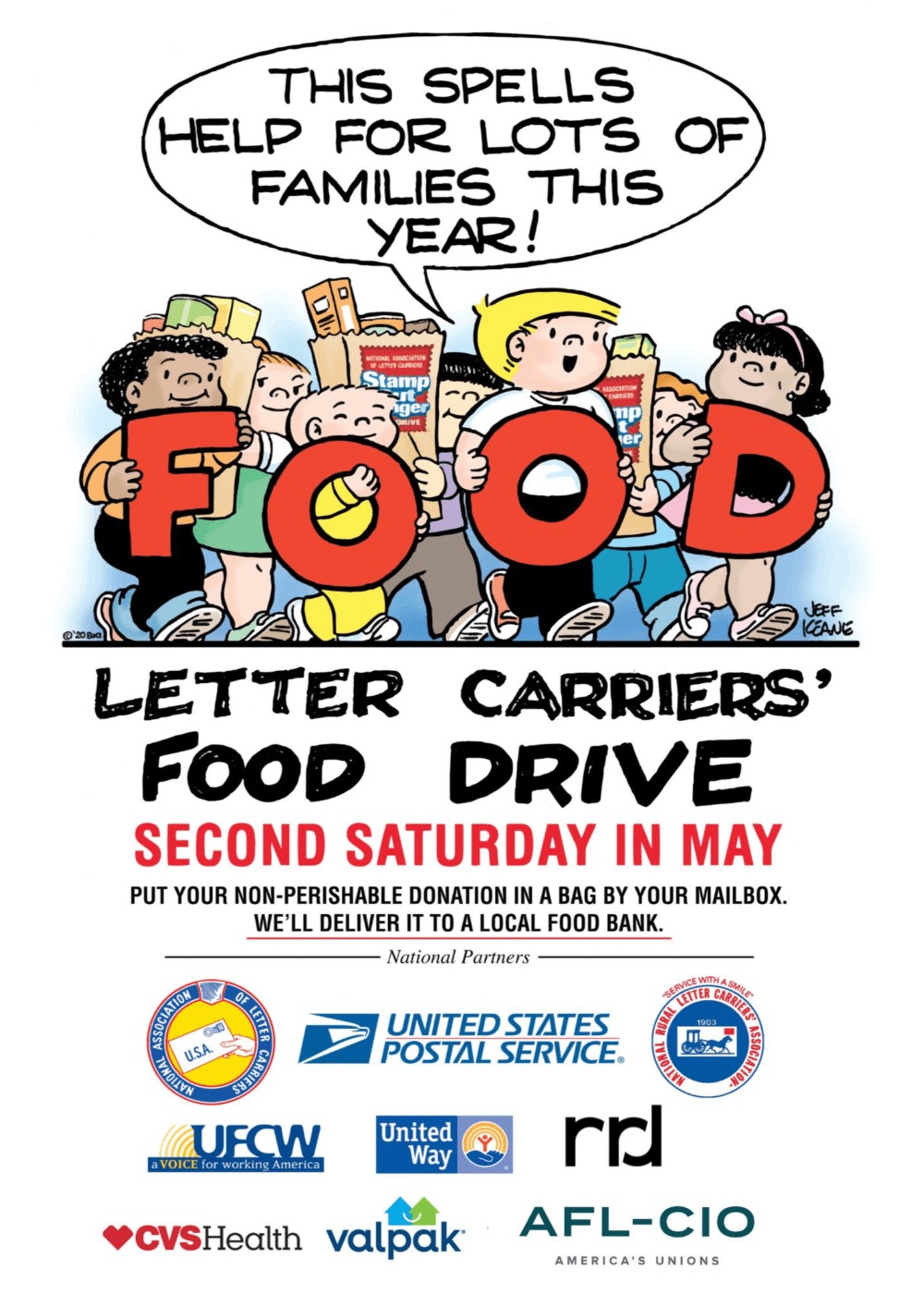
On Saturday, May 9, letter carriers across metro Detroit will collect bags of canned goods and boxed staples left beside mailboxes as part of the Letter Carriers' Stamp Out Hunger Food Drive. The food lands at Gleaners Community Food Bank, and this year the organization needs it more than usual.
The drive is straightforward for residents. Leave non-perishable items in a bag by the mailbox on the second Saturday in May, and the letter carrier collects them along the regular route. The National Association of Letter Carriers has run the campaign since 1993, and it now bills itself as the nation's largest single-day food drive, closing in on 2 billion pounds collected over its history, according to the union and the U.S. Postal Service. This year marks the 34th edition. In southeastern Michigan, post offices route the haul to Gleaners.
The timing matters because Gleaners is working through a sharp drop in donated food. The food bank took in more than 9 million fewer pounds of donations last year, with over 5 million pounds of that gap coming from reduced U.S. Department of Agriculture supplies in the 2025 fiscal year alone, Bridge Detroit reported. Federal food has historically made up as much as 30 percent of what Gleaners distributes, and the organization says it has no sign that USDA volumes will rebound. To cover the shortfall, Gleaners spent an extra 2 million dollars on food in the first five months of its current fiscal year.
Even with the squeeze, Gleaners moved more than 47 million pounds of food in its most recent fiscal year, serving over 300 partner pantries, soup kitchens, shelters and schools across Wayne, Oakland, Macomb, Livingston and Monroe counties, per the food bank and Bridge Detroit's reporting.
Angela Moloney stepped in as Gleaners' president and CEO in January, succeeding Gerry Brisson, who led the food bank for more than a decade. "I am honored to step into this role and join Gleaners at such a pivotal moment for the organization," Moloney said in the food bank's announcement of her hire.
The need is not new. Gleaners has operated since 1977, making it one of the country's oldest food banks, and Michigan's hunger numbers ran high before the current federal cuts. Feeding America's 2023 Map the Meal Gap put Michigan's food insecurity rate at 15.4 percent, above the national rate, the same data that counted 47 million people nationwide as food insecure, including 14 million children.
Summer typically widens the gap, when school lets out and students lose access to school meals. Gleaners runs a summer matching campaign aimed at that stretch.
Residents who want to help can set out non-perishable donations by the mailbox on May 9. Gleaners also accepts donations and volunteer sign-ups year round at gcfb.org.